


Perfect Binding Vs Saddle Stitch: Which Is Right For You?


TL;DR
- Perfect binding delivers a professional, book-like finish with a printable spine, making it ideal for thicker publications that require durability.
- Saddle stitch provides a cost-effective, fast, and lightweight solution that opens flat, making it best for shorter booklets.
- Perfect binding is the better choice for projects with 40–60 pages or more, while saddle stitch works best for under 64 pages.
- Perfect binding typically has a higher cost due to glue, trimming, and thicker covers, while saddle stitch is cheaper and quicker to produce.
- Perfect binding is suited for long-lasting, premium projects, while saddle stitch is best for temporary or budget-conscious materials.
- Ex Why Zed ensures expert guidance, premium quality, eco-friendly printing, and reliable turnaround for both binding methods.
When you’re creating a book, magazine, or brochure, the way it’s bound can make a big difference. It affects not just how professional it looks, but also how it feels in your hands and how long it lasts. Two of the most common methods are perfect binding and saddle stitch.
In this guide, we’ll break down the differences, pros and cons, and help you decide which binding method is the best fit for your project.
So, If you’ve ever wondered “What is the difference between saddle stitch and perfect binding?” or “How do I choose between perfect binding and saddle stitch for my booklet or magazine project?”, this guide is for you.
What Is Perfect Binding?
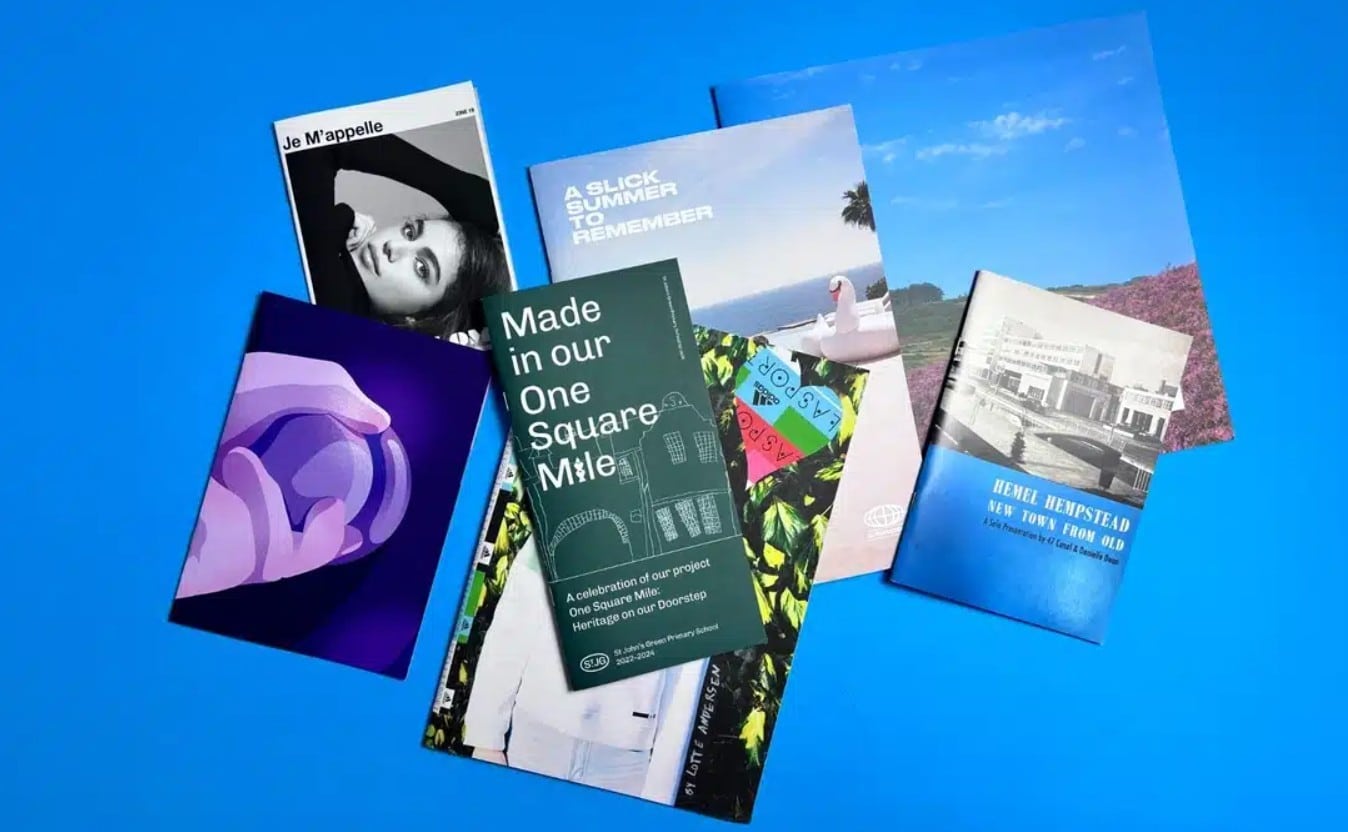
Perfect binding is a go-to method for softcover books, catalogs, and corporate reports because it gives a clean, polished look. Here’s how it works:
- Stack the pages – Arrange your inner pages in order.
- Roughen the spine edge – This helps the glue stick securely.
- Apply adhesive and attach the cover – A wraparound cover is glued to the spine.
- Trim the edges – The top, bottom, and outer edges are cut for crisp, flawless edges.
One of the biggest advantages is the flat spine. You can print text or graphics on it, making your publication easy to spot on a shelf. This small detail adds a professional touch.
Perfect binding is ideal for booklets with 40 to 60 pages or more. It is the right choice when you need a durable, high-end finish. Think annual reports, manuals, or literary journals. Projects like these benefit from the polished look and long-lasting construction that perfect binding provides.
What Is Saddle Stitch Binding?
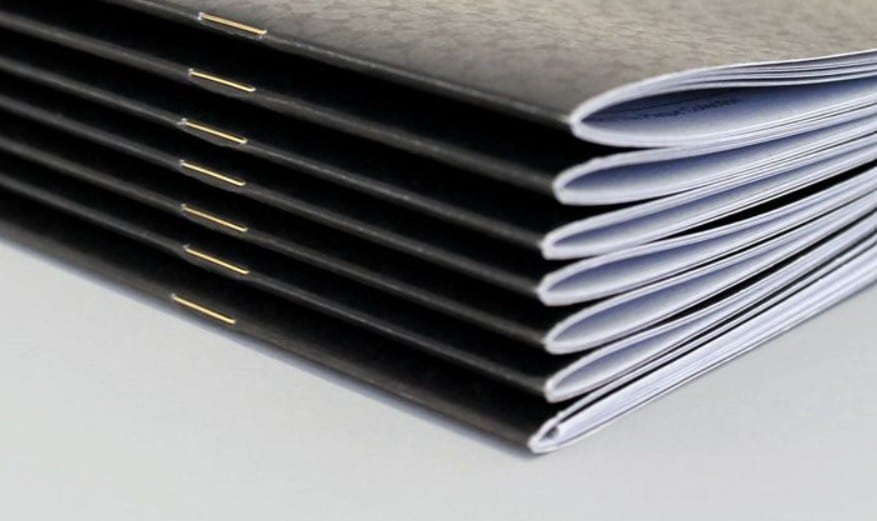
Saddle stitch binding is a simple and cost-effective way to create small booklets. Here’s how it works:
- Fold the sheets – Each sheet is folded in half.
- Nest the sheets – Folded sheets are stacked inside each other.
- Staple the spine – Staples are driven through the centerfold to hold everything together.
The method gets its name from the “saddle” used to support the sheets during stapling.
Saddle stitch is best for projects with 64 pages or fewer, and the total page count must be a multiple of four because of the folding process.
It’s ideal for magazines, newsletters, event programs, comic books, and other small publications. Pages lie flat when open, making it easy for readers to browse guides or brochures. If your project is lightweight, short, and budget-conscious, saddle stitch is usually the most practical choice.
What Are the Main Differences Between Perfect Binding and Saddle Stitch?
When comparing saddle stitch binding vs perfect binding, the real differences come down to how they are made, how much they cost, how durable they are, and how many pages they can hold. These factors directly shape the appearance, lifespan, and practicality of your final booklet or book.
Let's break them down together:
1. How Do Perfect Binding and Saddle Stitch Differ In Construction & Appearance?
|
Feature |
Perfect Binding |
Saddle Stitch |
|---|---|---|
|
Spine |
Flat and square |
Folded and stapled |
|
Appearance |
Professional, book-like |
Simple, booklet-like |
|
Spine Printing |
Yes |
No |
|
Durability |
High, suitable for long-term use |
Moderate, best for short-term use |
So, what does this really mean for your project?
Perfect binding gives your booklet that polished, professional vibe. Think of it like a paperback book you would find on a shelf. It looks substantial, feels sturdy, and even lets you print on the spine so people can spot it at a glance. It is perfect when you want your work to look serious and last.
Saddle stitch, meanwhile, is more easy-going and practical. The pages lie flat, making it super simple to flip through quickly. It is lightweight, cost-effective, and great for shorter runs. It works perfectly for newsletters, event programs, or any project where convenience and speed matter more than a high-end look.
2. How Does Page Count Affect Your Choice Of Binding?
Page count plays a huge role in picking the right binding.
Perfect binding is ideal for thicker booklets. It works perfectly for manuals, catalogs, or books with hundreds of pages. The adhesive needs a minimum thickness to hold the pages securely, so very thin documents are not suitable.
Saddle stitch is best for shorter publications, usually under 64 pages. Trying to saddle stitch a thicker document can cause “creep,” where the inner pages stick out more than the outer ones. It also puts extra strain on the staples, which can lead to greater durability issues.
In short, choose perfect binding for projects that need a sturdy, long-lasting finish. Saddle stitch is better for lightweight, short-run booklets where speed and cost are more important than thickness or durability.
3. How Does Cost Compare Between Perfect Binding & Saddle Stitch?
Cost is one of the key factors when picking a binding method.
Perfect binding usually costs more. It involves extra steps, stacking the number of pages, adding strong glue, and trimming the edges for a clean finish. It also uses more materials, like a thicker cover.
So, when people ask “What are the Advantages of Perfect Binding?” the answer is simple: you’re paying for durability, a polished spine, and a product that elevates your brand image.
Saddle stitch, on the other hand is much cheaper. The process is simple, fold the pages and staple them through the center. It uses fewer materials and can be done quickly. This makes it perfect for shorter projects like newsletters, event programs, or comic books, especially if you are on a tight budget.
In short, go with saddle stitch if you want to save money. Choose perfect binding if you need a polished, durable finish that will last.
Get a Quote Today and bring your booklet, catalogue, or magazine to life with professional printing.
Perfect Binding: What Makes It Shine & Where It Falls Short?
Perfect binding is popular for books, catalogs, and reports because of its polished, professional look. However, like any binding method, it has strengths and limitations. Here’s a closer look:
Why Perfect Binding Works for Your Project:
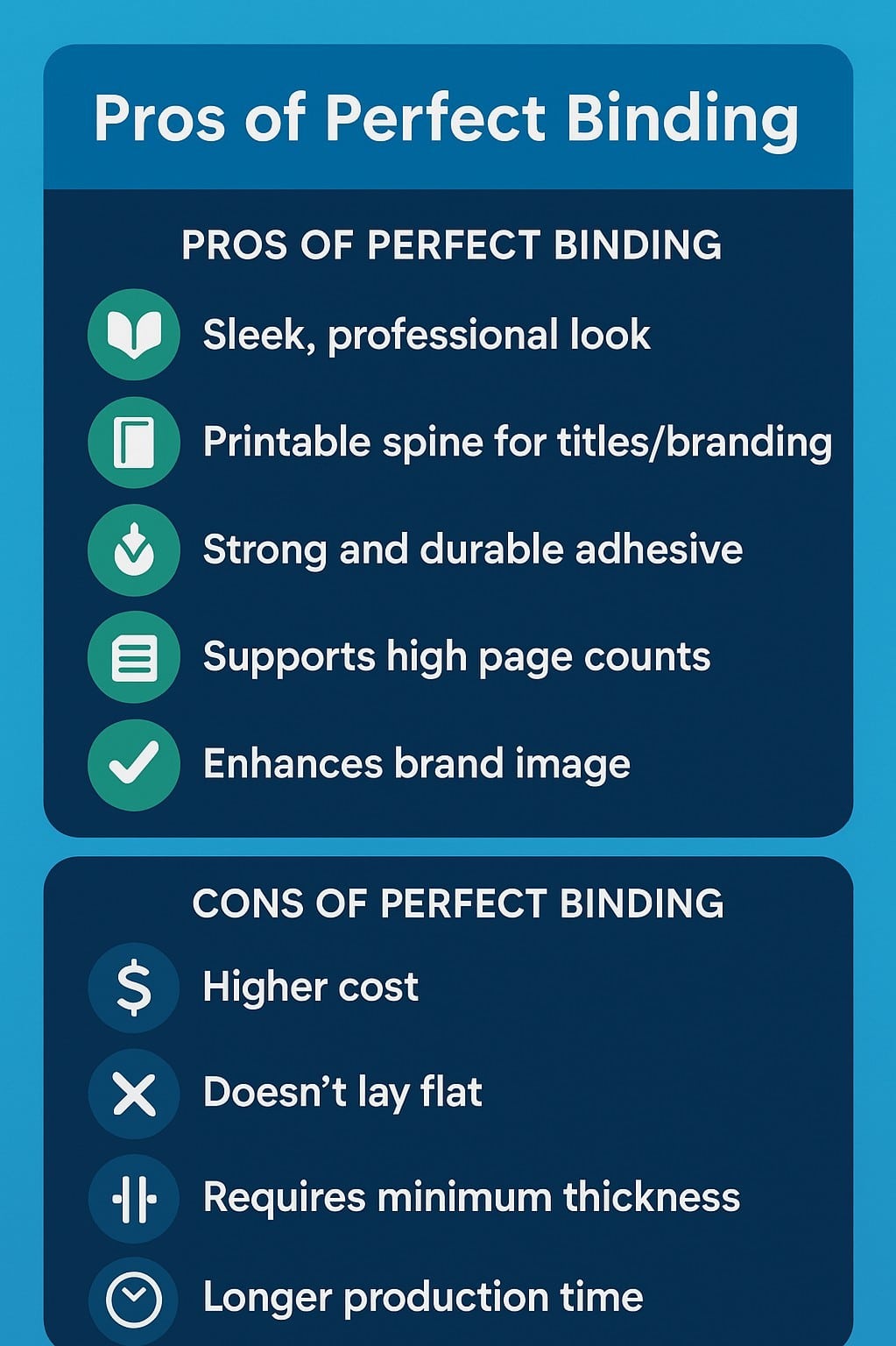
- Sleek, Professional Appearance: Perfect binding creates a clean, square spine and a smooth finish, giving your publication a polished, book-like look. This makes it ideal for projects where presentation matters, like company reports, novels, or high-end artist catalogs.
- Printable Spine: The flat spine allows you to print titles, volume numbers, or branding. This is especially useful for books or manuals that will be displayed on shelves, making them easier to identify.
- Durability: The strong adhesive keeps pages firmly in place. Perfect bound books can withstand frequent handling, which makes them suitable for long-term use, reference materials, and professional documents.
- Supports Thick Projects: Perfect binding can handle high page counts, making it a good choice for thicker publications. It ensures the pages stay together neatly, even when your project has hundreds of pages.
- Elevates Brand Image: The finished product looks high-quality and professional, which can enhance your brand’s perception among readers or clients.
See how we used perfect binding for a stunning A4 Art Catalogue Printing Project
Where Perfect Binding Might Not Be Ideal:
- Higher Cost: The materials and labor involved make perfect binding more expensive than simpler methods like saddle stitch.
- Doesn’t Lay Flat: Books naturally tend to close, which can be inconvenient for workbooks, guides, or manuals that need to stay open while in use.
- Minimum Page Requirement: Thin booklets won’t work well, as the adhesive needs sufficient thickness to hold the pages.
- Longer Production Time: Compared with saddle stitch, perfect binding takes longer, which may affect tight deadlines.
Saddle Stitch: When To Use It & When To Avoid It?
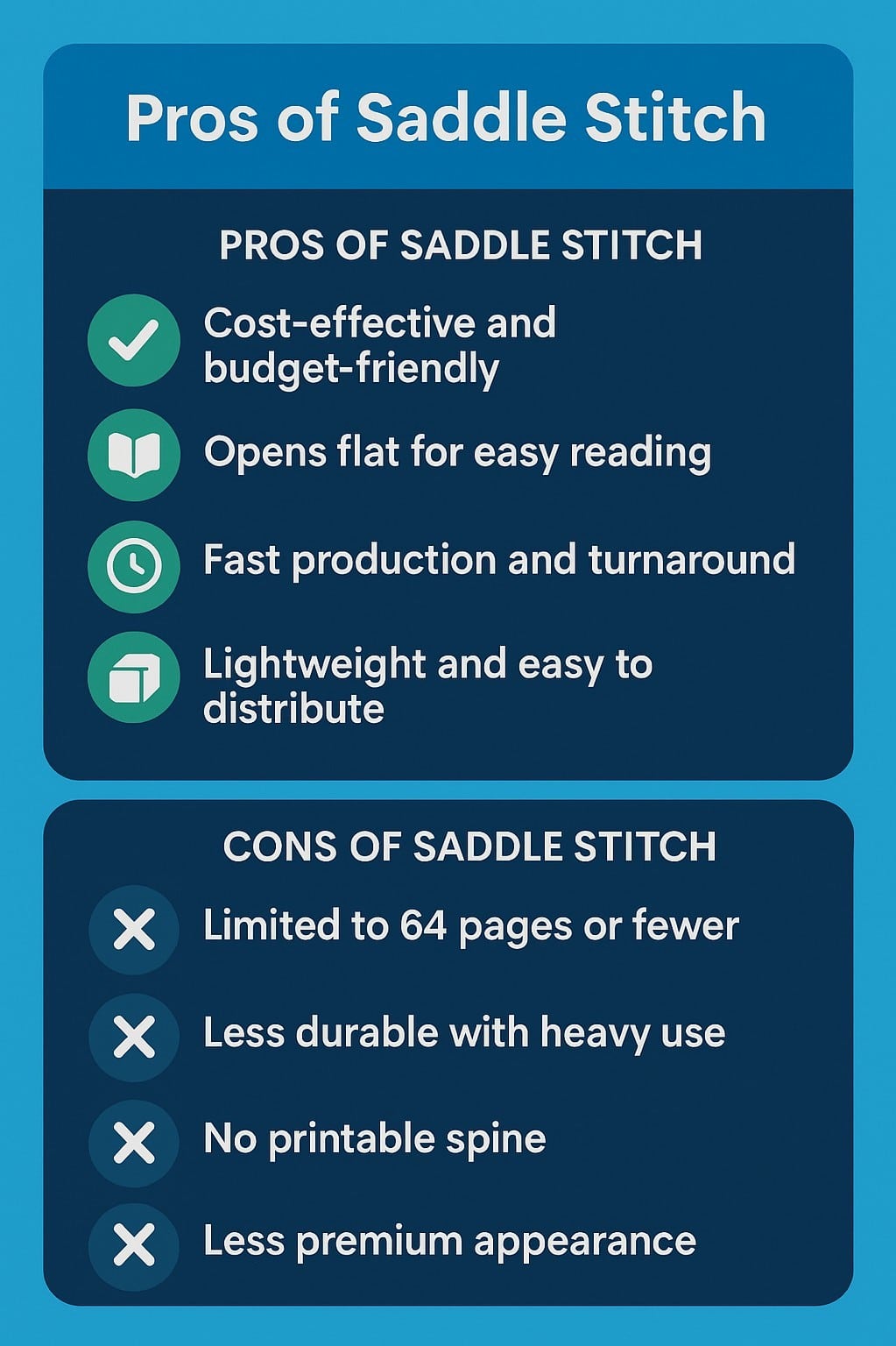
Saddle stitch is a simple and budget-friendly binding method, but its suitability really depends on the type of project you’re working on. Its minimalistic approach makes it fast, economical, and practical, but it also comes with some limits you should consider.
Let’s break down what makes saddle stitch a smart choice for some projects, and where it might fall short:
Why Saddle Stitch Works for Your Project:
- Cost-Effective: Using just staples and folded sheets, saddle stitch keeps material and labor costs low. This makes it ideal for projects on a budget or large print runs, such as newsletters, brochures, or promotional booklets. You get a professional-looking product without breaking the bank.
- Opens Flat for Easy Reading: Because the pages are nested and stapled, saddle-stitched booklets can lay almost completely flat. This makes reading, writing, or referencing easier, which is perfect for guides, workbooks, event programs, or manuals that people need to handle comfortably.
- Fast Production: The straightforward assembly process means less time in production. Quick turnaround is a major advantage when you’re working with tight deadlines or multiple batches of materials.
- Lightweight and Easy to Distribute: Without heavy glue or thick covers, saddle-stitched booklets are lighter and more convenient for mailing or handing out. This makes them ideal for events, workshops, or any project where distribution matters.
Where Saddle Stitch May Fall Short:
- Limited Page Count: This method works best for documents with 64 pages or fewer. Trying to bind more pages can cause “creep,” where inner sheets extend beyond the outer ones, creating an uneven edge. Overstuffed staples may also not hold securely, reducing the overall quality of the finished booklet.
- Less Durable Over Time: While staples are strong enough for short-term use, frequent handling or repeated opening can loosen them. Saddle-stitched publications are generally not designed for long-term storage or heavy use, unlike perfect bound books.
- No Spine Printing: Because the spine is folded and stapled, it cannot be printed on. This limits branding opportunities and makes it harder to identify the publication when it’s stored on a shelf.
- Appearance Limitations: While neat and functional, saddle stitch doesn’t offer the same polished, professional look as perfect binding. For projects intended to make a strong impression or appear premium, this may be a drawback.
So, if you ask in what are the pros and cons of perfect binding versus saddle stitch? In short, Perfect binding delivers a professional, durable look with a printable spine, making it ideal for thicker, long-lasting publications. Saddle stitch, on the other hand, is cost-effective, lightweight, and opens flat, but it’s best for shorter booklets with fewer pages.
Why Print With Ex Why Zed?
When choosing between perfect binding and saddle stitch, the right printing partner makes all the difference. That’s why creators, businesses, and publishers trust Ex Why Zed.
With years of experience, Ex Why Zed delivers:
- Expert Guidance – Clear advice on the best binding for your project
- Professional Quality – Premium materials and finishes that elevate your publication
- Cost-Effective Solutions – Options for every budget, from short-run booklets to high-end reports
- Fast Turnaround – Reliable delivery even on tight deadlines
- Eco-Friendly Printing – Sustainable choices without sacrificing quality
From zines and event programs to catalogs and annual reports, Ex Why Zed helps you achieve a print finish that stands out.
Contact Us Today and bring your project to life.
Ready to Bind It Your Way?
At the end of the day, binding is more than just holding pages together. It’s about how your project feels in someone’s hands. Do you want it to make a polished statement, or be quick, practical, and easy to flip through? The choice is yours, and getting it right means your work leaves the impression it deserves.
Frequently Asked Questions
What is another name for saddle stitch binding?
Another common name for saddle stitch binding is staple binding (or sometimes just stapled binding), since the method uses staples through the fold of the pages to hold them together.
Which binding method is best for thicker books or high page counts?
For projects with a high page count, perfect binding is the popular choice. It is specifically designed to handle thicker booklets and provides the necessary durability to meet your book printing needs, making it one of the popular options for substantial publications like manuals, catalogs, and books.
Is perfect binding more expensive than saddle stitch binding?
Yes, perfect binding is typically more expensive than saddle stitch. The lower cost of saddle stitch is due to its simpler process and minimal materials. This makes it a more budget-friendly choice for print projects with shorter turnaround times and smaller page counts.
Can either binding style allow a book to lay flat when open?
Yes, but one does it much better. Saddle stitch binding is known for its excellent flat opening. While perfect binding does not naturally lay flat due to its glued spine, its professional finish is often prioritized for projects where a book binding needs to look polished.
Can saddle stitch binding be used for high page count documents?
Saddle stitch binding is typically used for documents with a lower page count, as this method involves folding sheets and stapling them along the spine. For high page count documents, saddle stitch is generally not recommended because it can become bulky and may not hold together well, making perfect binding a better choice for thicker publications.
What are the typical turnaround times for perfect binding versus saddle stitch?
Typically, saddle stitching offers faster turnaround times because the process is simpler and requires less drying time, making it ideal for smaller projects or quick deadlines. Perfect binding, on the other hand, often takes a bit longer due to the adhesive curing and additional steps involved, so production times may be longer compared to saddle stitch.
Are there any design or artwork considerations I should be aware of when deciding on perfect binding vs. saddle stitch?
Yes. Perfect binding needs a spine design, while saddle stitch cannot have spine printing. Also, saddle stitch requires page counts in multiples of four.
What ecological or sustainability factors might influence my choice between perfect binding and saddle stitch?
Saddle stitch usually uses fewer materials and no glue, making it slightly more eco-friendly. Perfect binding uses more paper and adhesives, but recycled options are available.
How do perfect bound and saddle stitched books perform in terms of laying flat and ease of use?
Saddle-stitched books lay nearly flat, making them easier to read or write in. Perfect bound books don’t lay flat naturally and tend to close on their own.
Can you explain the process of how perfect binding and saddle stitching are done during book production?
Perfect binding stacks pages, roughens the spine, applies glue, attaches a wraparound cover, and trims edges. Saddle stitch folds sheets, nests them, and staples through the fold.
Is there a significant price difference between perfect binding and saddle stitch for short-run printing jobs?
Yes. Saddle stitch is cheaper and faster for short runs. Perfect binding costs more due to glue, trimming, and cover work but offers a more professional finish.