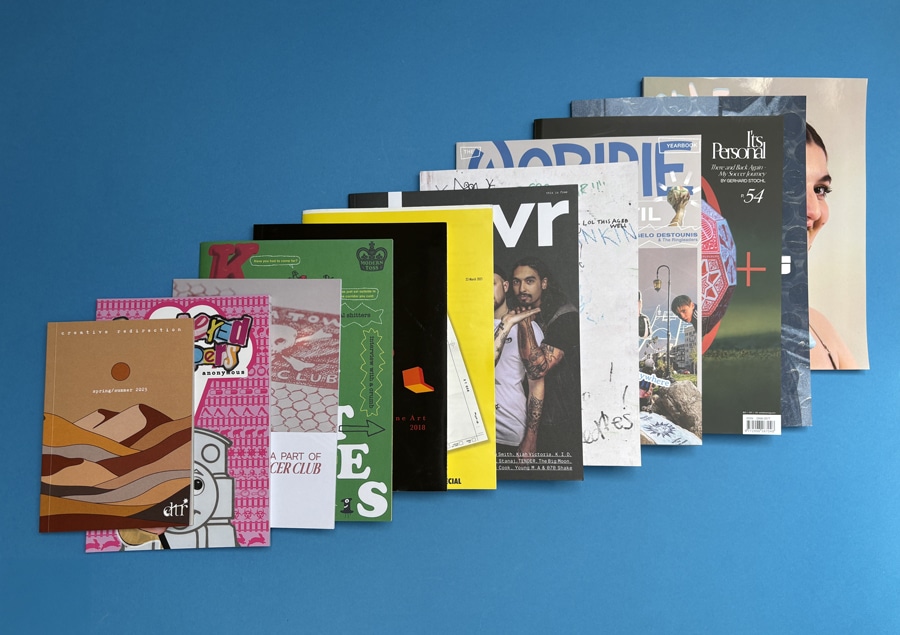
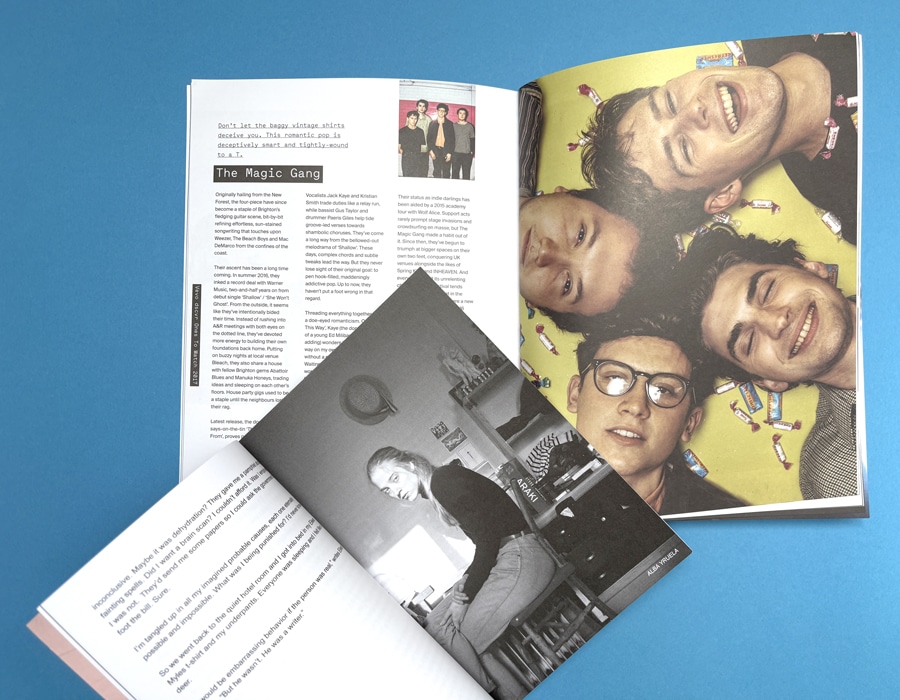
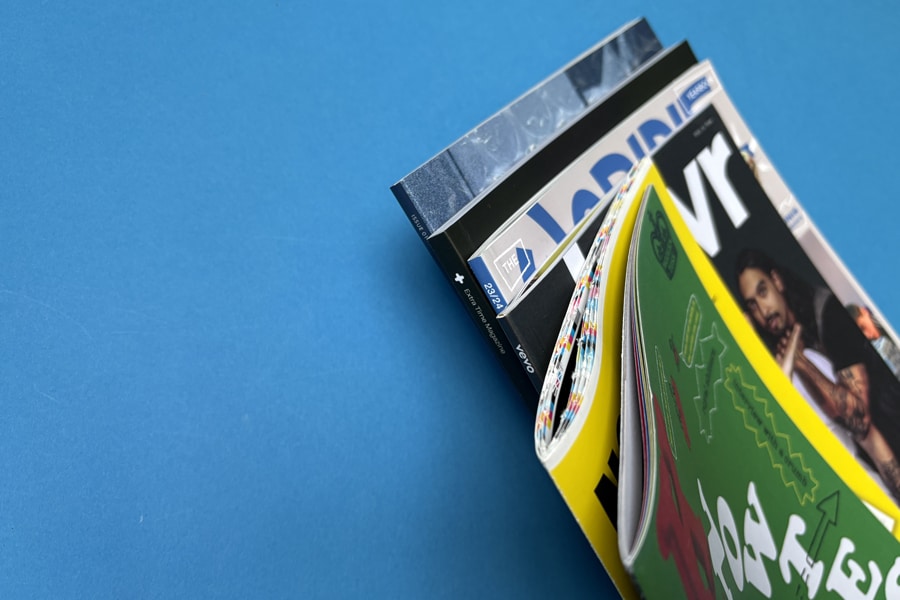
Magazine printing sits at a brilliant crossroads between design, storytelling and physical craft. It is where a sequence of pages becomes something readers can hold, flick through, annotate, share, sell, display or treasure. Whether you are producing an indie culture title, a photography-led issue, a student showcase, a brand magazine or a one-off passion project, the best results come from making confident decisions early: format, paper, binding, artwork setup, budget and timing all shape the final publication.
At Ex Why Zed, we have seen how the right print choices transition a magazine from “finished file” to genuinely compelling object. A tactile uncoated stock can soften a literary journal. A gloss-laminated cover can sharpen a visual identity and add shelf presence. A perfect-bound spine can turn a substantial issue into something that feels closer to a collectable paperback than a disposable brochure. The details matter because they change how the work is received.
Expert takeaways on Magazine Printing
Paper is part of the design, not an afterthought. Silk, gloss and uncoated stocks each create a different reading experience and influence colour, texture and tone.
Binding should match the scale of the publication. Saddle stitching suits lighter, slimmer magazines; perfect binding gives thicker issues a neat square spine and more premium presence.
Pricing becomes easier to control when you understand the levers. Page count, paper, binding, finish and quantity all affect the quote, while unit cost generally falls as print runs increase.
A professional file check is one of the most valuable safeguards in print. Bleed, colour mode, resolution and layout issues are far easier to fix before printing than after delivery.
Location matters far less than expertise. With free tracked UK delivery, real human advice and specialist magazine printing support, creators can access the right printer without being limited to the nearest shop.
Magazine Printing Starts with the Experience You Want to Create
Before thinking about paper weights or binding methods, it helps to ask a more human question: what should this magazine feel like in someone’s hands?
A fashion or photography publication may need high-impact images, polished surfaces and crisp reproduction. A cultural journal might call for a quieter, more tactile feel. A community magazine may need to be cost-conscious, approachable and easy to distribute. A student portfolio publication might need to balance creative flair with enough durability to survive repeated handling at degree shows, interviews and exhibitions.
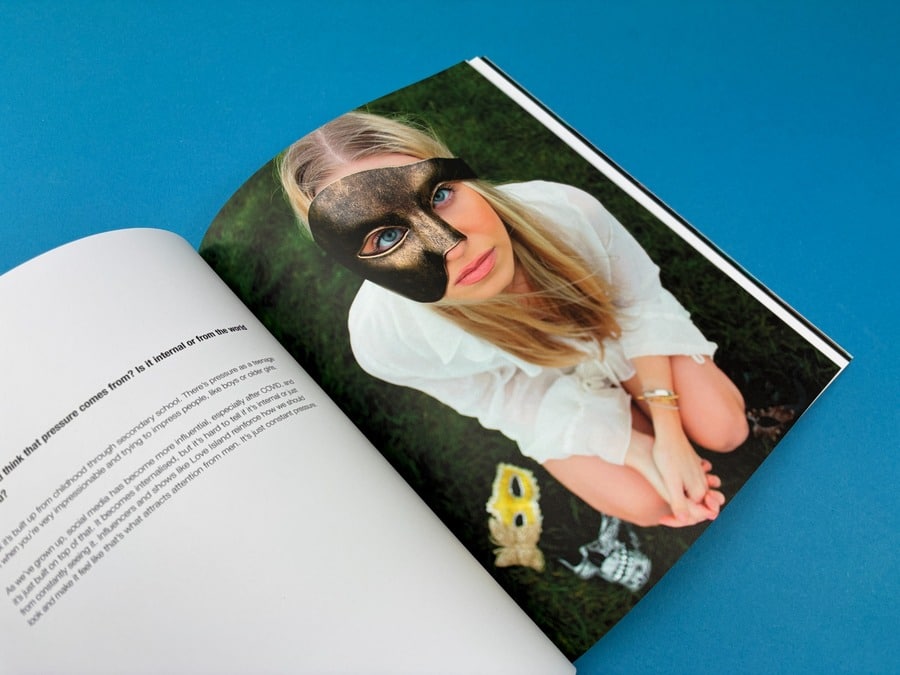
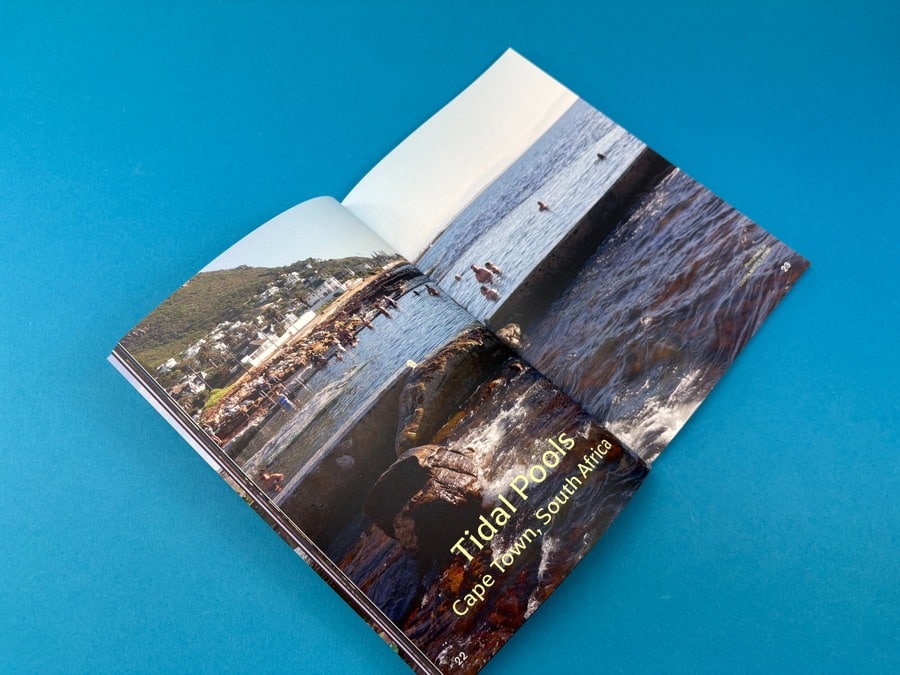
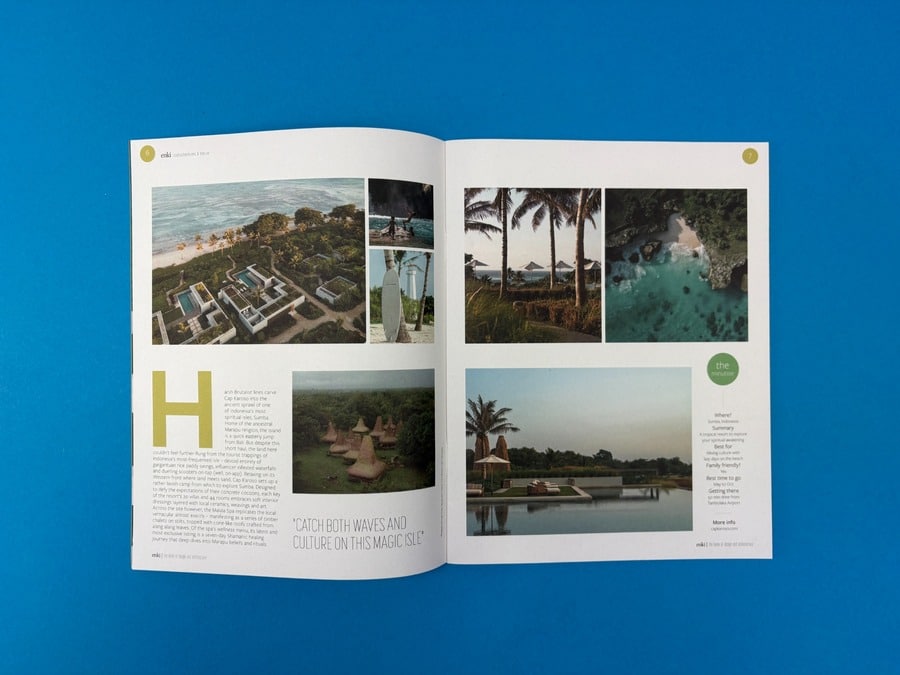
This is where magazine printing becomes more than production. It becomes editorial design made physical. The trim size affects how spreads breathe. The cover stock influences first impressions. The internal paper changes how photography, illustration and typography sit on the page. Even the binding style alters how the magazine opens, stacks and lives on a shelf.
For readers exploring the broader possibilities of UK magazine production, our guide to professional glossy magazine printing captures how strong paper choices, vibrant colour and thoughtful finishing can turn a digital layout into a polished, persuasive publication.
Choosing the Right Magazine Format: A4, A5, Square or Custom
Magazine size is one of the earliest creative decisions, yet it often gets left until late in the process. That can create awkward compromises. A format should suit the content, the audience and the budget rather than simply defaulting to whatever was used last time.
A4 magazines feel bold, spacious and editorial. They suit photography, art direction, reports and visually expansive layouts. A5 magazines are more compact, portable and often more cost-effective, making them popular for indie titles, programmes, zines and smaller-run publications. Square formats, such as 210 x 210mm, offer a contemporary, design-led feel and can work beautifully for image sequences, portfolios and experimental layouts. Custom rectangles create another layer of individuality when the project warrants it.
A useful rule is to let the content lead. Wide panoramic photography may prefer a landscape or generous portrait format. Dense articles with supporting illustration may feel more comfortable in A5 or a medium portrait trim. Heavily visual spreads often benefit from a larger canvas, while compact publications can feel intentionally intimate and collectible. This follows the benefit-led print framing in the supplied specification guide: translate format into experience, not just millimetres.
Paper Choice: The Fastest Way to Change How a Magazine Feels
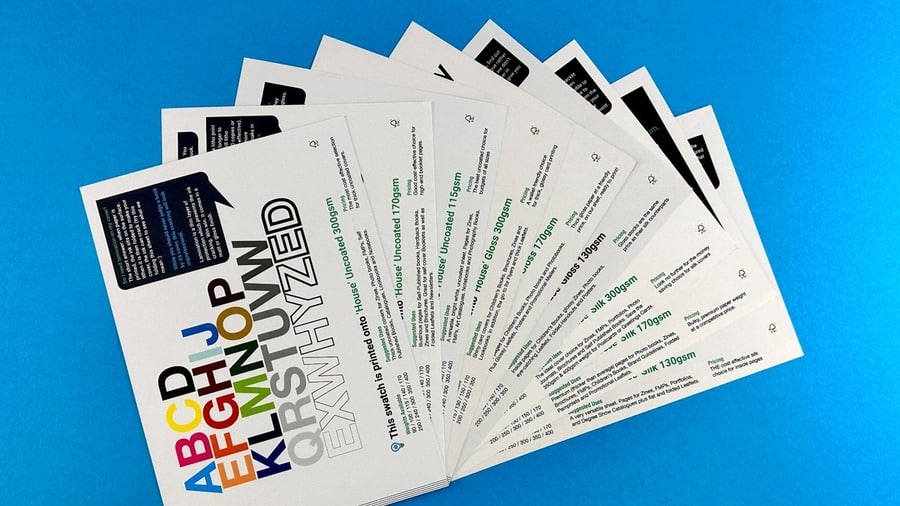
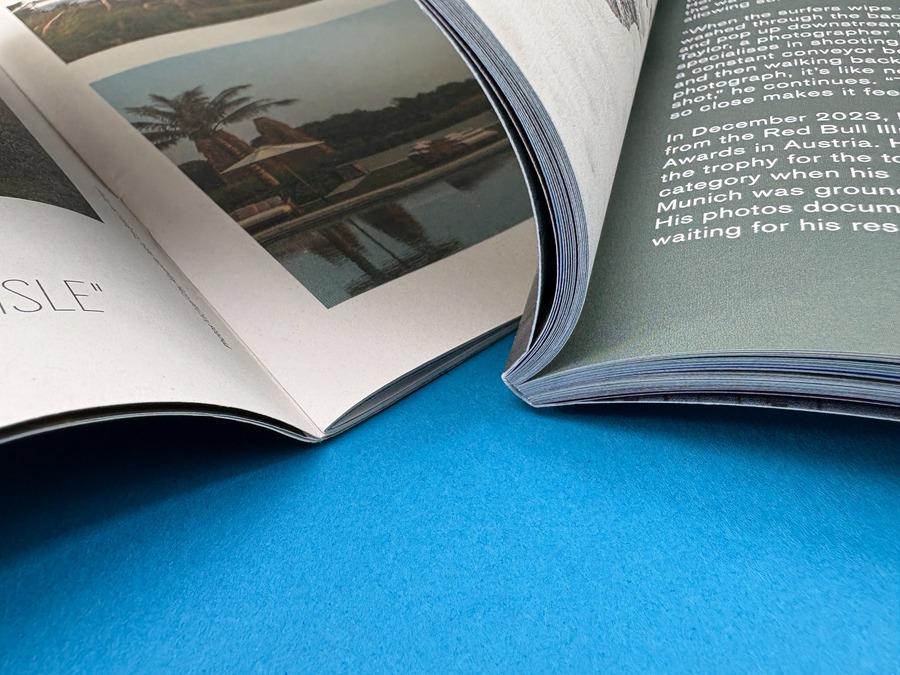
Paper does a remarkable amount of quiet work. It influences colour intensity, weight, readability and the emotional tone of the piece. Two magazines with identical artwork can feel entirely different if one is printed on gloss and the other on uncoated stock.
Silk paper
Silk is a versatile choice with a smooth surface and gentle sheen. It delivers clean, sharp reproduction without becoming too reflective, making it a dependable option for image-heavy editorial design, brand magazines and mixed text-and-photography layouts.
Gloss paper
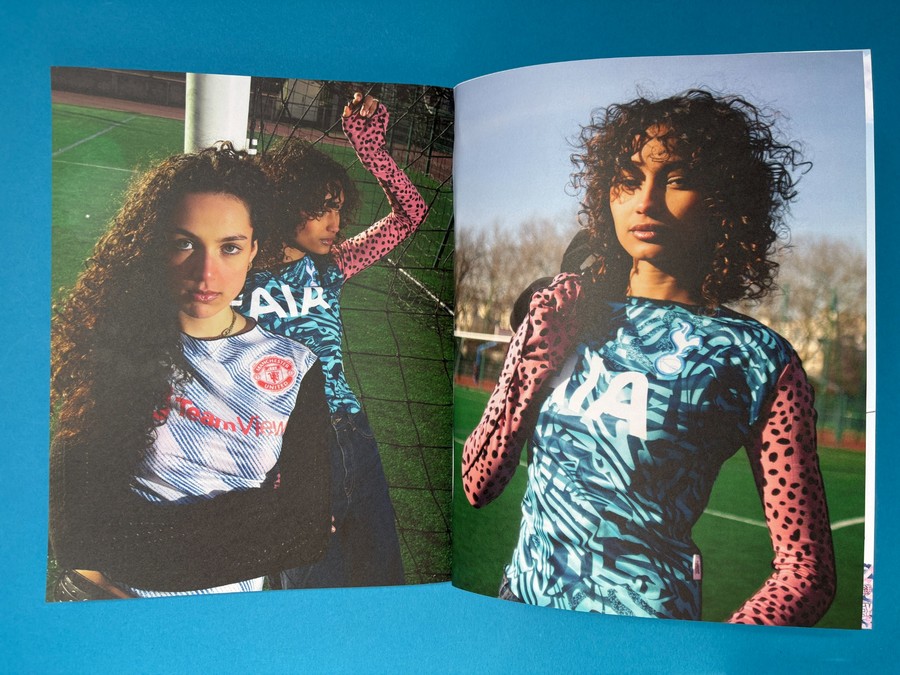
Gloss creates brighter highlights and a more vivid, reflective finish. It is particularly effective for photography, fashion, lifestyle and visual promotion where colour energy matters. The glossy magazine printing page rightly positions gloss as the finish that makes artwork feel brighter, sharper and more overtly high-impact.
Uncoated paper
Uncoated paper has a softer, more tactile character. It reduces glare, feels natural to the touch and often suits editorial magazines, poetry, illustration, interviews and publications that want a warmer or more literary tone. It is also a sensible route when the work benefits from a quieter, understated finish rather than maximal shine.
Cover stock
Most magazines use a heavier cover than the inside pages. Source pages point to covers in the region of 300gsm to 350gsm silk, often with matt or gloss lamination for protection and extra polish. A more robust cover gives the issue structure, makes it more durable in transit and strengthens that all-important first impression.
When explaining paper to clients, we find it more useful to talk in sensory terms. A 130gsm silk inner does not just “meet a spec”; it gives pages a comfortable flick-through feel with enough substance to avoid flimsiness. A laminated 350gsm cover does not simply “add a finish”; it creates a sturdier, more resolved object that feels ready to sell, hand out or archive. That matches the plain-English spec guidance in your uploaded glossary.
Binding Decisions: Saddle Stitched or Perfect Bound?
Binding is where a stack of pages becomes a magazine with a defined personality.
Saddle stitched magazines
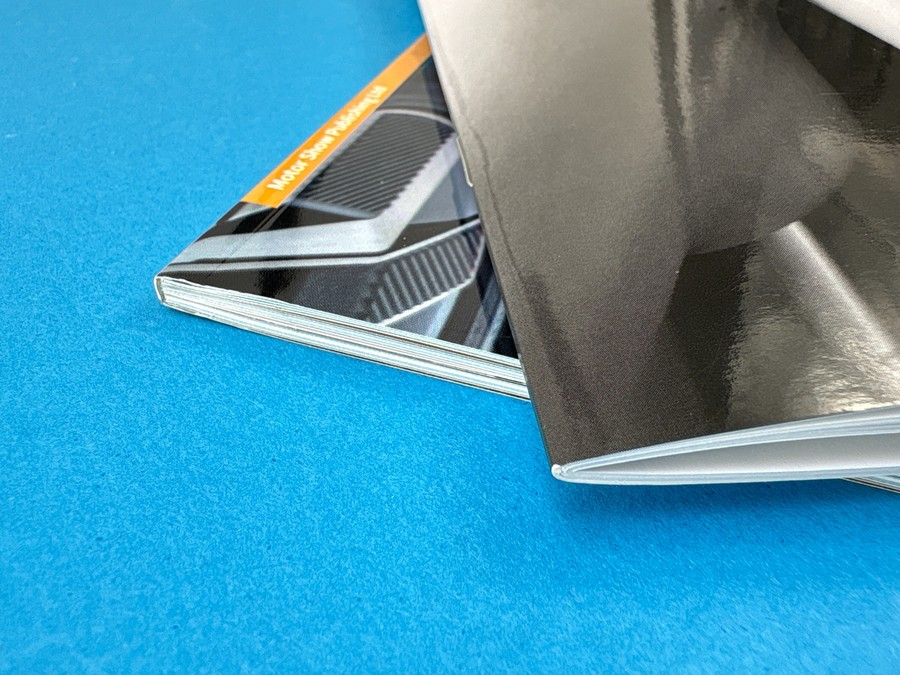
Saddle stitching, often called stapled binding, works brilliantly for shorter magazines. Folded sheets are nested and secured with staples through the spine, creating a lightweight, economical format that opens generously and feels unmistakably “magazine-like”. It is generally suited to slimmer publications, with Ex Why Zed pages commonly recommending it for projects up to around 40 pages, depending on stock.
Perfect bound magazines
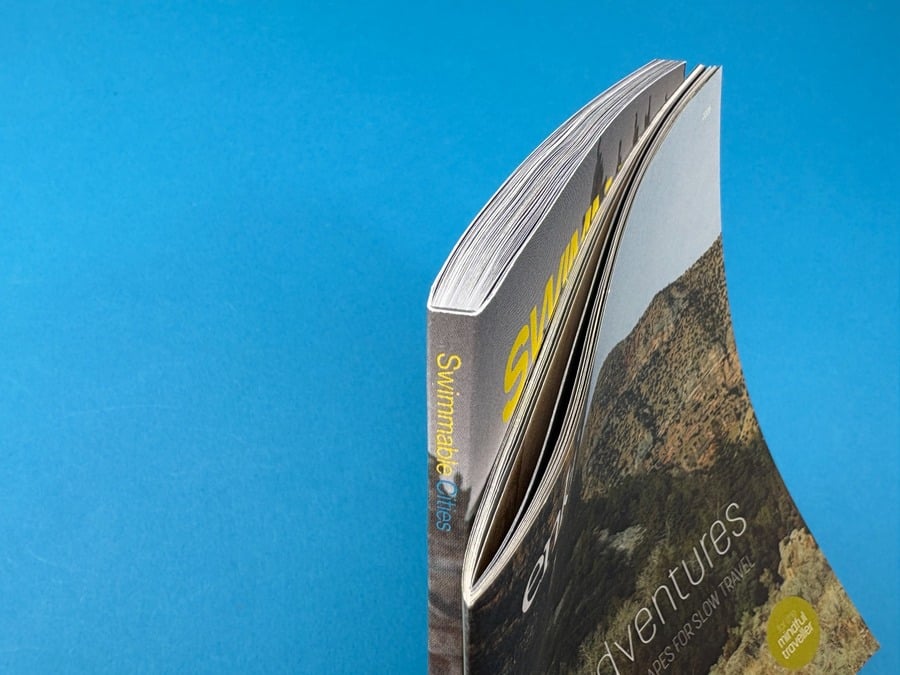
Perfect binding creates a clean square spine and a more book-like finish. Pages are stacked and glued into a wraparound cover, making it a strong choice for more substantial publications, larger annuals, collections, journals and premium editorial projects. The source pages consistently recommend perfect binding once a project moves beyond the lighter saddle-stitched range.
The decision is partly practical and partly emotional. Saddle stitching says nimble, immediate, energetic. Perfect binding says substantial, refined, shelf-worthy. Neither is universally “better”; the best choice is the one that amplifies the project.
Magazine printing prices are not arbitrary. They are shaped by a handful of clear variables, and once you understand them, quoting becomes far less mysterious.
The main cost drivers are:
Page count: more pages require more paper, press time and finishing.
Paper stock: uncoated, silk and gloss sit at different price points, with premium cover choices adding further variation.
Binding style: saddle stitch is usually the most cost-effective; perfect binding adds production complexity and a more refined finish.
Quantity: unit cost typically falls as the print run increases.
Finishes: lamination or specialist cover treatments add modest cost but can make a noticeable difference to durability and presentation.
This is why there is no single “magazine printing price” that fits every project. A 32-page A5 stapled publication for a first print run behaves very differently from a 144-page perfect-bound art magazine on premium stock. The trick is to shape a specification that respects both the creative ambition and the budget.
The content from magazine printing in Liverpool is especially useful here because it spells out the pricing levers in plain language: pages, paper, binding, quantity and finish. That makes it easier for creators to make deliberate trade-offs rather than discovering the cost implications at the final hurdle.
For first-time publishers, one of the most practical approaches is to establish three tiers:
Essential version: standard format, sensible page count, cost-effective stock and saddle stitching where appropriate.
Balanced version: a richer inner stock, stronger cover and perhaps a refined laminate.
Premium version: perfect binding, heavier materials or more elevated finishing for a flagship issue.
That framework helps preserve the creative direction while showing where investment has the greatest visual return.
Artwork Setup: The Quiet Difference Between Smooth Printing and Last-Minute Stress
Many magazine printing problems are not design problems at all. They are file setup problems. A beautiful layout can still stumble if it is exported incorrectly, built without bleed or supplied with low-resolution imagery.
Across the source pages, the recommended artwork basics are consistent:
Supply a print-ready PDF
Include 3mm bleed
Use CMYK colour
Prepare images at 300dpi
Ensure pages are ordered and exported correctly
Check margins and safe areas
Review proofs carefully before approval
The pages on magazine printing in Oxford and magazine printing in Nottingham are especially strong on this point. Both emphasise that a free file check is not a decorative extra; it is an important quality-control step that catches issues before they turn into visible print problems or costly reprints.
For creators unfamiliar with print production, that support can be transformative. Instead of facing an intimidating technical wall, they get clear guidance: what needs adjusting, why it matters and how to move forward. That is exactly the kind of human, confidence-building print journey your brand voice prioritises.
Turnaround Times: Build a Realistic Schedule Around the Print Method
Magazine printing often sits against a fixed date: a launch night, exhibition, show opening, crowdfunding reward deadline, client campaign or university hand-in. That means timing deserves as much care as paper and binding.
The source pages consistently indicate the following production expectations:
Stapled magazines: typically around 3 to 4 working days
Perfect-bound magazines: typically around 4 to 5 working days
Delivery is then added, with Ex Why Zed offering free tracked UK delivery across the country.
A tight schedule is not impossible, but it rewards early clarity. Finished files, a settled specification and quick proof approval all help a project move cleanly through production. If a magazine is needed for a set event date, the safest approach is to mention that deadline at the quoting stage so the practical route can be assessed honestly. The Yorkshire page makes that point well, especially for launches, exhibitions and time-sensitive deliveries.
Location no longer needs to dictate access to quality. The regional pages for London, Newcastle, Birmingham and Yorkshire repeatedly position specialist magazine printing as a UK-wide service delivered to the door, rather than a compromise based on whichever print shop happens to be nearest.
One Copy, Ten Copies or Thousands: Print the Quantity That Fits the Moment
A modern magazine printing service should not force creators into oversized runs just to get started. The source content makes a compelling case for no minimum order, allowing clients to print a single copy as a test, a portfolio piece, a prototype, a gift edition or a pre-launch proof before committing to more.
That flexibility is especially valuable for independent publishers and designers who want to handle a real printed version before scaling up. Screens cannot reveal everything. A physical copy shows whether the image sequence flows, whether body text feels comfortable, whether the cover has enough presence and whether the issue is paced properly in the hand.
Once the specification is confirmed, larger runs become easier to price and plan. The Nottingham page notes that digital printing is well suited to short runs, while litho becomes more relevant as volume increases, with Ex Why Zed operating both HP Indigo digital and Heidelberg litho presses in-house.
This gives creative publishers a pleasingly elastic path: test small, refine intelligently, scale when the audience is ready.
Sustainable Magazine Printing Without Empty Gesture
Sustainability in print is most meaningful when it is built into the production choices rather than bolted on as a vague slogan. Across the source material, Ex Why Zed highlights several practical measures:
FSC-certified papers across jobs
Vegetable-based inks on litho runs
Recycled paper options where suitable
No minimum order, helping clients avoid unnecessary overproduction
Advice that aligns specification with purpose rather than pushing excess
For magazines with an ethical, artistic or community-led identity, those decisions matter. A publication does not need to choose between visual polish and responsible thinking. The strongest result comes from making informed choices: print the quantity you need, use the stock that fits the concept, and avoid waste disguised as ambition.
What Makes a Magazine Feel Professionally Printed?
A magazine feels professional when all the decisions agree with one another.
The paper supports the content. The binding matches the page count. The file is built correctly. The cover has enough strength. The turnaround is realistic. The quote has been shaped around actual priorities, not guesswork.
That harmony is what turns a publication into a confident finished object. It does not require the biggest budget or the most elaborate finish. It requires the right set of choices, made in the right order.
Final Takeaway: Print the Magazine Your Work Deserves
Magazine printing is both a technical process and a creative finishing act. It asks for good judgement: how to balance colour with tactility, cost with impact, speed with care and ambition with practicality. When those choices are handled thoughtfully, a magazine becomes far more than a collection of pages. It becomes a piece of communication with presence. Something designed to be noticed, opened and kept.
For designers, self-publishers, authors, illustrators and creative teams, the most useful mindset is simple: start with the reader experience, build the specification around that, and let the print decisions serve the idea. That is where strong magazine printing begins.
Key Highlights
Nottingham has several commercial printers, but only a few are suited to creative or editorial-style magazine printing.
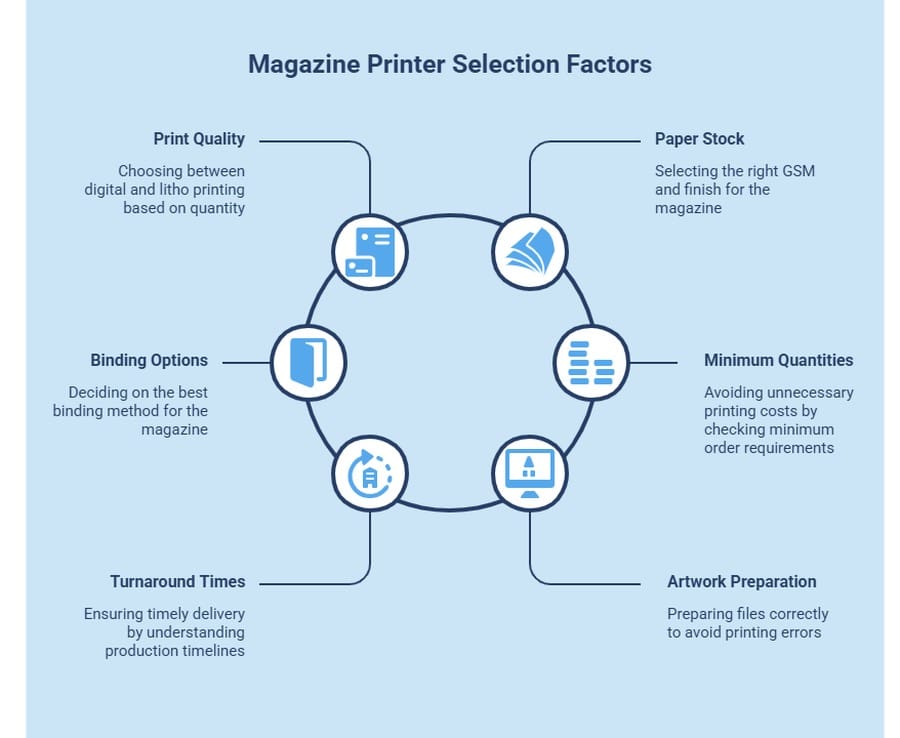
Choosing the right printer depends on key factors such as print quality, paper stock, binding style, turnaround time, and artwork preparation.
Digital printing is typically more cost-effective for short runs, while litho becomes viable at higher volumes.
Paper type and finish play a crucial role in how your magazine looks and feels, particularly for photography-led or design-focused projects.
Local printers can be convenient for simple jobs, but online specialists often offer greater flexibility, support, and range of options.
Ex Why Zed is an online creative print specialist with nearly 20 years of experience, free UK delivery, and no minimum order.
Custom magazine printing costs vary depending on quantity, format, and finishes, so it’s important to align your spec with your budget from the outset.
Finding the best magazine printing in Nottingham is not as straightforward as it seems. When producing magazines, issues like incorrect paper stock or poor colour reproduction often only become obvious once the printed copies arrive, which is too late and costly to fix.
Many printers offer magazine printing as part of a wider commercial service, but not all are equipped to handle the specific demands of creative or editorial publications. From choosing the right binding style to ensuring artwork is print-ready, the process requires a level of precision and guidance that general print providers may not always offer.
This is why many creators now explore specialist magazine printers across the UK who provide more tailored support, flexible print runs, and consistent quality.
In this article, we will walk you through what to look for before choosing any printer, compare Nottingham options, explain what drives magazine printing costs, and show why so many creatives across the East Midlands now order online without giving anything up.
What Is Magazine Printing and How Does It Differ from Booklet Printing?
Magazine printing refers to producing multi-page, bound publications with a separate, heavier cover stock. Unlike a standard booklet, which can be self-cover using the same paper throughout. A magazine uses a heavier cover (typically 250 to 300gsm) combined with a lighter interior paper weight. That combination gives it the look and feel readers associate with a professional publication.
This distinction matters because it affects your spec decisions, budget, and which printers are genuinely equipped for the job. Not every printer appearing in a magazine printing near me search has the presses, stocks, and pre-press experience needed to produce a polished creative publication.
What Should You Look for Before Choosing a Magazine Printer?
Before comparing specific companies, it is essential to understand what actually separates a great magazine print job from a poor one. These six factors will help you evaluate any printer properly, whether local or online, and avoid costly mistakes.
1. Print Quality: Is Digital or Litho the Right Fit for Your Run?
The first thing to check is whether the printer is using digital or litho printing, and more importantly, whether it suits your quantity.
Digital printing is typically better for short runs, as there are no setup plate costs and turnaround is faster. Litho printing, on the other hand, becomes more cost-effective at higher volumes and offers consistent ink density across large runs.
What to check:
Which printing method is recommended for your quantity
Whether the printer clearly explains the crossover point
Sample quality, especially for image-heavy pages
Pro Tip: ~500 copies is the typical crossover point at which litho printing becomes more cost-effective than digital for UK magazine printing
2. Paper Stock: What GSM and Finish Should Your Magazine Use?
Paper choice directly affects how your magazine looks, feels, and performs. A good printer should offer a clear range of stocks and help you choose based on your content.
The most common finishes include:
Silk: Balanced and professional, widely used for editorial work
Gloss: Bright and reflective, ideal for image-heavy layouts
Uncoated: Matte and tactile, often used for premium or artistic publications
What to check:
Range of available paper types and weights
Whether guidance is provided based on your project
Availability of physical samples before ordering
A practical GSM guide, confirmed from Ex Why Zed's paper range:
90 to 170gsm for inside pages: 115gsm and 130gsm suit the vast majority of magazine interiors.
250 to 300gsm for covers: Heavier stock, usually finished with gloss, matt, or soft touch lamination.
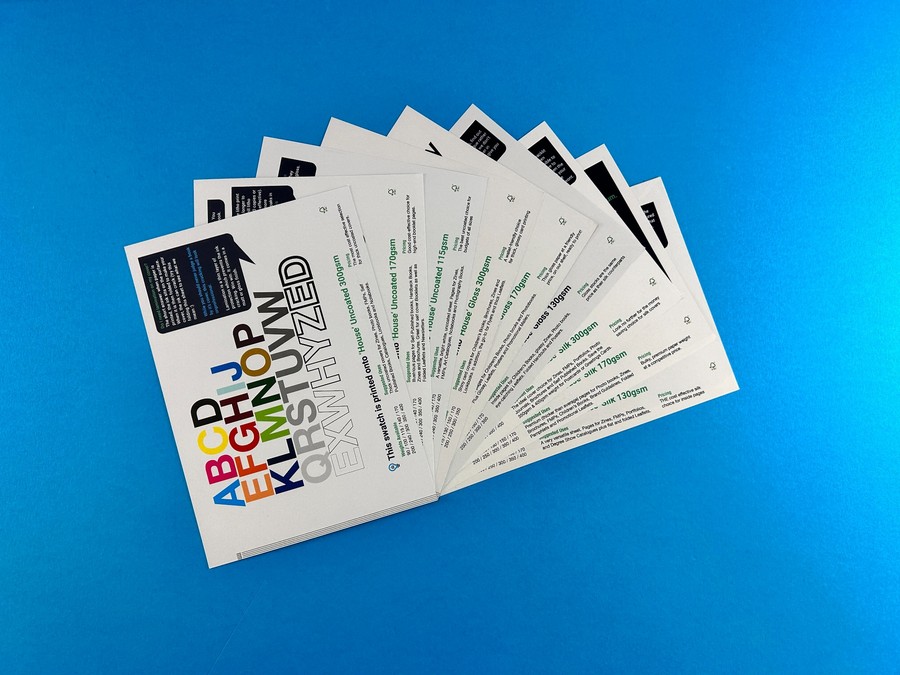
Not sure what any of this feels like? Ex Why Zed sends out free paper sample packs. Email us at hello@exwhyzed.com, and we'll get one to you within a day.
3. Binding Options: Which One Suits Your Magazine?
Binding impacts both usability and presentation. Not all printers offer the same range, so it is important to confirm what is available.
Common options include:
Saddle stitch: Cost-effective and suitable for up to ~100 pages
Perfect bound: Professional, spine-based format for thicker publications
Wiro-bound: Practical for manuals or reference material
What to check:
Available binding styles and limitations
Minimum page requirements (especially for perfect bound printing)
Whether the format suits your content and page count
4. Minimum Quantities: Will the Printer Penalise You for a Short Run?
Many printers impose minimum order quantities, which can push you to print more than you actually need.
What to check:
Minimum order requirements
Whether short runs are priced reasonably
If test copies or small batches are available
For first-time projects or experimental runs, flexibility here can make a significant difference to your budget and risk.
Ex Why Zed operates HP Indigo digital presses with no minimum order. Order now!
5. Turnaround Times: What's Actually Realistic?
Production timelines vary depending on format, quantity, and complexity. It is important to understand what is realistically achievable.
What to check:
Standard turnaround times for your chosen spec
Whether express options are available
How delays (e.g., artwork issues) are handled
As a general guide:
Stapled magazines: ~3 working days
Perfect bound: ~4 working days
Planning ahead is key, especially for events or fixed deadlines.
6. Artwork Preparation: What Files Do You Need to Have Ready?
Even a well-designed magazine can fail in print if the files are not set up correctly. A reliable printer should make requirements clear and offer support if needed.
What to check:
File format requirements (typically PDF)
Colour setup (CMYK vs RGB)
Resolution and bleed specifications
Whether a file check or preflight review is included
Standard requirements usually include:
300dpi resolution
CMYK colour mode
3mm bleed with crop marks
Getting your files set up correctly before submission is the single best way to avoid delays. Check out our setup guides to make the process straightforward.
Which Are the Best Magazine Printing Companies in Nottingham?
Here is an honest look at the main options available, covering both local Nottingham printers and the online specialist that consistently comes up for creative magazine work. Let's get started.
1. Ex Why Zed: The Creative Print Specialist (Online, Free UK Delivery)
Ex Why Zed is not exactly based in Nottingham. We are in Colchester, Essex, but we deliver free to Nottingham and everywhere else in the UK, typically within 2 to 5 days of production completion.
Founded in 2006, Ex Why Zed has spent nearly 20 years working exclusively with art students, designers, photographers, bands, zine makers, and independent publishers.
Our portfolio includes Sidewalk Magazine, Cunning Folk, Burnt Roti, and more than 500 other real creative projects. Magazine and publication printing is their specialism, not a line item on a long products list.
Why Do So Many UK Creatives Choose Ex Why Zed for Magazine Printing?
It comes down to specialism. Most print shops offer magazine printing as one item on a long list. Ex Why Zed has spent nearly 2 decades doing almost nothing else. That difference shows up in the advice you get, the paper stocks available, the quality of pre-press support, and the standard of what comes out of the box.
1. No Minimum Order: Print One Copy or Five Hundred
Most printers set minimums that push small-run projects into territory that does not make financial sense. Ex Why Zed's HP Indigo digital press has no minimum order.
2. HP Indigo Digital and Heidelberg Litho: Both In-House
The HP Indigo is widely regarded as the benchmark for short-run digital quality. Colours are rich and consistent across photography and detailed artwork. For runs up to 500 copies, results are hard to distinguish from litho.
For longer runs, Ex Why Zed switches to Heidelberg litho presses. All in-house, same team, no third-party handoffs, and no drop in quality when your volume goes up.
3. Free File Check Before Anything Goes to Press
Every order at Ex Why Zed gets a free preflight check. A real person looks at your files, checks bleed, resolution, and colour mode, and flags anything that could cause a problem before printing begins. This saves reprints, delays, and the cost of both.
Support is also available by email, phone, live chat, and Zoom throughout the process.
4. Free UK Delivery Including Nottingham, Typically in 3 to 5 Days
Every order ships free, tracked, to anywhere in the UK. For magazine printing near me searches, the delivery question resolves itself. Your magazines arrive at the door within 2 to 5 days of production completion.
5. FSC Certified Paper and Sustainable Printing
All papers at Ex Why Zed are FSC certified, and vegetable-based inks are used on litho machines. For creative and student audiences where sustainability genuinely matters, this is built into the process and not added on as a marketing claim.
6. Order a Single Test Copy Before You Commit
Before committing to a full run, you can order one copy at Ex Why Zed. It is the most accurate proof available: the actual printed result from the actual press. No local Nottingham printer proactively offers this on their website. For first-time printers, it removes a significant amount of risk from the process.
How Do You Get a Custom Quote from Ex Why Zed?
The process is straightforward:
Upload your files via WeTransfer to hello@exwhyzed.com.
Include your spec: page count, finished size, paper weight and finish, binding style, quantity, and delivery address.
The Ex Why Zed team will review your files and come back with a quote, usually quickly.
Once approved, an invoice is sent, and payment is made by bank transfer or card via Stripe.
Your print is checked, produced, and delivered free to your door.
Hear It From Our Customers
"Always great service Always great service; knowledgable, experienced and friendly which makes the whole process a pleasure. Add in keen pricing and excellent quality product and you'll understand why I have used Ex Why Zed many times over the years. Highly recommended." - Matt Dixon
"Great quality and helpful information I decided on sending my work there because of what looked like good art related work on their website. Their guidance for what they need is very good, and they were helpful on the phone. Quality of the finished booklets was excellent, really good print quality and finish. Would definitely use again. (I’ve used quite a few printers over the years too)" - Tess
Ready to print? Get a personalised quote for your magazine tailored to your format, quantity, and finish.
2. Temple Printing, Nottingham
Temple Printing is a family-run commercial printer that has been operating in Nottingham for over 75 years. They produce stapled booklets, perfect-bound publications, and wiro-bound work, with all printing done in-house at their Nottingham factory.
They are a solid option for straightforward commercial print, including internal newsletters, standard business booklets, and event brochures. Their setup is geared towards commercial rather than creative briefs, and there is no dedicated magazine printing service or editorial portfolio to speak of.
Works well for
Less suited to
Standard commercial booklets and brochures
Specialist creative or editorial magazines
Saddle stitch and perfect bound on standard stocks
Short-run or bespoke creative projects
Local collection if you are based in Nottingham
Premium paper stocks and specialist finishes
Everyday business print requirements
Photography-led or art publications
3. Nottingham Printing Ltd, Hucknall
Based in Hucknall, Nottingham Printing Ltd covers everyday print, including business cards, leaflets, posters, banners, and calendars. They have an online shop and a quick ordering process for standard products.
Booklets and brochures appear in their product range, but there is no magazine printing specialism, no editorial portfolio, and no specialist support for creative publication work. A reasonable choice for everyday business print, but not the right fit for a publication with genuine design ambitions.
Works well for
Less suited to
Every day leaflets, posters, and business cards
Creative or editorial magazine printing
Standard business print at competitive prices
Bespoke paper stocks or binding choices
Quick turnaround on simple, familiar formats
Publications needing pre-press guidance
Online ordering with a straightforward process
Short-run magazines, zines, or art publications
4. Adlard Print, Ruddington, Nottingham
Adlard Print is a litho specialist covering magazines, booklets, brochures, and business stationery. They are worth considering for readers who need larger print runs, as litho becomes more cost-effective at volume, and Adlard's presses are set up for it.
For short-run or creative magazine work, their setup is a less natural fit. Litho carries higher setup costs that are not economical below a few hundred copies, and there is limited flexibility for bespoke specs and specialist paper stocks.
Nottingham-based for those who prefer local contact
Independent publishers and first-time printers
Stationery and business print alongside magazines
Art, photography, or editorial publications
5. John E Wright, Nottingham, Est. 1900
One of the oldest print companies in Nottingham, John E Wright has six branches nationwide and covers both small and large format commercial print. They are well-reviewed for customer service and turnaround on standard jobs.
They are a generalist with no specialism in creative publications or editorial magazine formats. Their portfolio reflects a broad commercial offering. Reliable for standard print requirements, but not the natural choice when creative specialism and paper quality are the priority.
Works well for
Less suited to
Standard commercial print across a range of formats
Creative or editorial magazine publishing
Large format alongside small format requirements
Short-run creative or bespoke projects
Established company with a long track record
Specialist paper stocks and finishes
Multiple Nottingham-area branch locations
Independent publishers or art students
6. Cycle Printworks, Nottingham
Cycle Printworks started as a student-run print group at the University of Nottingham and now specialises in large-format output, including A3, A2, A1, and A0. They are genuinely good at conference posters, portfolio prints, and architectural drawings.
They are not a magazine printer. Their strengths are in single-sheet large-format work, not bound publications. Worth knowing if you need poster printing in Nottingham, but not the right choice for anything requiring binding, covers, or multi-page publications.
Works well for
Less suited to
Large format posters at A3, A2, A1, and A0
Multi-page bound magazine printing
Student and university project output
Publications needing cover stocks or binding
Conference posters and portfolio prints
Saddle stitch, perfect bound, or wiro work
Community-focused, locally rooted service
Creative or editorial publication projects
How Do These Nottingham Magazine Printers Compare Side by Side?
Here is how the main options stack up across the factors that matter most for creative magazine printing:
Printer
Creative Specialism?
Short Runs?
Best Suited To
Ex Why Zed
Yes, nearly 20 years
Yes, no minimum order
Zines, art publications, student work, creative magazines
How Much Does Magazine Printing in Nottingham Actually Cost?
Magazine printing prices can vary significantly depending on your specifications, and without clarity on what drives those costs, it is easy to overspend or make trade-offs that are not necessary. Before requesting quotes, let us help you break down the key factors that influence pricing so you can make informed decisions from the outset.
What Factors Affect the Price of Magazine Printing?
According to Ex Why Zed's own pricing data, custom magazine printing costs range from £0.30 to £3.60 per unit. That is a wide range, driven by the following variables:
Factor
What it means for your budget
Quantity
The single biggest lever. More copies lower the unit cost, but only if you actually distribute all of them.
Page count
More pages mean more paper and more press time. Saddle stitch handles up to 100 pages; perfect bound requires a minimum of 36 inside pages.
Paper stock
Standard silk is the most cost-effective option. Premium uncoated or specialist stocks like GF Smith Colorplan cost more.
Binding style
Saddle stitch is the quickest and cheapest. Perfect bound adds time and cost but lifts the finished result considerably.
Cover finish
Unlaminated covers cost less. Gloss, matt, and soft touch lamination each add cost, and all look noticeably more professional.
Digital vs litho
Digital is more economical for under 500 copies. Litho wins on price per unit at higher volumes.
Online vs Local Magazine Printing in Nottingham: Which Makes More Sense for Your Project?
Once you have a clear idea of your budget and specifications, the next decision is where to print. Should you choose a local Nottingham printer for convenience, or work with an online specialist that offers broader capabilities? The answer depends on your priorities:
When Does a Local Nottingham Printer Make Sense?
There are genuine situations where local is the right call:
You need same-day or walk-in service with print-ready files already prepared
You want to review physical proofs in person before approving a job
You have a very small quantity and would rather collect than wait
You have an established relationship with a local supplier who knows your requirements
These are real advantages, but they apply to a narrow set of circumstances. For most magazine printing projects, none of them is the deciding factor.
When Does an Online Specialist Like Ex Why Zed Make More Sense?
For the majority of creative magazine printing projects, including short runs, independent publications, student work, and agency briefs, an online specialist wins on almost every measure:
Wider range of paper stocks and specialist finishes.
Proper pre-press support, including a free file check before printing begins.
No minimum order, so you print exactly the quantity you need.
Free tracked UK delivery, including to Nottingham.
Transparent and responsive communication throughout the process.
Genuine specialism in creative publications, not a side product.
What's the difference between a magazine and a booklet?
A magazine typically uses a heavier 250–300gsm cover with lighter interior pages, while a booklet can use the same stock throughout. Both formats are used in magazine printing UK projects, depending on budget, finish, and overall presentation. Ex Why Zed prints both and can advise on which spec best suits your project.
What is the minimum number of copies I can order for magazine printing?
Ex Why Zed is one of the best single magazine printing service providers in Nottingham. There is no minimum order; you can print a single copy. This is genuinely useful as a test before a full run. Most local printers in Nottingham set minimum quantities that make very small runs expensive or impractical.
How long does magazine printing take in the UK?
At Ex Why Zed: saddle stitched magazines take 3 working days from print-ready artwork; perfect bound takes 4 working days. Bespoke jobs and busy periods (degree show season) may take a little longer. Always get artwork in early if you have a hard deadline.
What file format do I need for magazine printing?
PDF is the standard, with separate files for the cover and interior. Artwork should be in CMYK, at 300dpi, with 3mm bleed and crop marks set. Ex Why Zed's file setup guides cover every step, and the free preflight check catches most common issues before printing begins.
Can I see a physical proof before printing the full run?
Yes, at Ex Why Zed, you can order a single copy as a test print before committing to a full run. It's the most accurate proof available: the actual printed result from the actual press, not a screen approximation.
Is magazine printing VAT exempt in the UK?
Most printed magazines and booklets are zero-rated for VAT in the UK, meaning no VAT is added to the price you pay. It's worth confirming on your specific job; the Ex Why Zed team can advise.
What paper should I use for the best glossy magazine printing?
For best glossy magazine printing: 115–130gsm gloss for interior pages and 300gsm gloss with lamination for the cover. Ex Why Zed's HP Indigo handles high-resolution photography on gloss stock particularly well; colours are vivid and consistent.
Do you offer free delivery for magazine printing to Nottingham?
Yes, Ex Why Zed offers free tracked delivery anywhere in the UK, including Nottingham. Delivery typically arrives within 2–5 days of production completion, which takes 3–4 working days for most magazine specs.
How do I keep magazine printing costs as low as possible?
Choose digital for short runs (under 500 copies), use standard 115gsm or 130gsm silk stock, and opt for saddle stitch if your page count allows. Order only the quantity you'll actually distribute. According to Ex Why Zed, a typical 100-copy A4 magazine starts from around £1.14 per unit.
Can Ex Why Zed help if I've never printed a magazine before?
Yes, it's where the team excels. They're used to first-time printers, check your files before anything goes to press, and advise on specs in plain English. Their Print Journey guides, videos, and case studies are free to use at any stage. Just give them a shout at hello@exwhyzed.com.
Where can I find the cheapest magazine printing in Nottingham?
The cheapest magazine printing Nottingham options usually come from providers offering digital printing for short runs. To achieve cheap magazine printing Nottingham, choose standard paper stocks, simple binding, and realistic quantities to keep overall costs low without compromising quality.
Key Highlights
Oxford has several local print shops, but few specialise in magazine printing for creative publishers.
Local options range from same-day walk-in shops to established trade printers, each with different strengths.
For print quality, paper choice, and creative support, online UK specialists often outperform local shops.
Ex Why Zed has been printing for creative people across the UK since 2006, with HP Indigo digital and Heidelberg litho presses.
Free file checks, free paper samples, no minimum order, and free tracked UK delivery set Ex Why Zed apart.
Stapled magazines are typically with you in 3 to 4 working days; perfect bound in 4 to 5.
Oxford is one of the UK’s most creative and academically active cities, with art students, indie publishers, researchers, and zine makers constantly producing new work. But when it comes to finding the best magazine printing in Oxford, many creators face the same challenges: limited local options, inconsistent print quality, and uncertainty around paper types, binding choices, and how the final product will actually look and feel.
A magazine is more than printed pages; decisions around paper, colour accuracy, number of pages, and finishes can make a significant impact on whether your work feels professional or disappointing. Without clear guidance, choosing the right printer can quickly become overwhelming.
This guide explores Oxford’s main magazine printing options, explains what truly matters when comparing printers, and introduces experienced UK specialists like Ex Why Zed as part of the wider landscape worth considering.
What Should You Look for in a Magazine Printer?
Before committing to any printer, local or online, here are the key factors worth checking to ensure a smooth process and a professional final product.
1. Print Quality
Start by asking what print technology a provider uses.
HP Indigo digital printing is ideal for short print runs and single issues, delivering consistent colour from copy one with no strict minimum quantity of magazines. Heidelberg litho printing is better suited to higher volumes, where unit costs improve at scale. A reliable printer should help you choose the right method based on your project rather than defaulting to one process.
2. Binding Options
Binding affects both durability and how your magazine feels to read.
Saddle stitch binding remains the common choice for magazines up to around 40 pages, offering a clean and cost-effective finish. Perfect binding creates a square spine and suits thicker publications with a higher number of pages. Choosing the right binding option ensures your interior pages sit correctly and the final product holds together over time.
3. Paper Stock and Cover Choices
Paper types play a significant role in how readers experience your work. Coated silk or gloss stocks work well for image-led magazine design where colour vibrancy matters, while uncoated paper offers a tactile feel popular with zine printing and creative publications.
A heavier cover paper, typically 250gsm or above, adds structure and helps elevate the professional magazine printing finish.
4. Format and Size Options
Most printers offer standard A4 and A5 booklet printing formats, which suit editorial and text-led layouts. Creative publishers may prefer square or custom sizes for greater visual impact. Discuss format early, as custom sizing can influence pricing, trim lines, and estimated delivery date expectations.
5. File Setup and Preflight Support
A good printer should guide you through preparing a correct print file. Typically, this means submitting a single PDF or properly organised single pages with 3mm bleed, 300dpi images, embedded fonts, and CMYK colour mode. A free proof or file check is especially valuable, helping identify issues before printing and improving customer satisfaction.
6. Eco Credentials
Sustainability is increasingly important, particularly within Oxford’s creative and academic community. Look for FSC-certified paper types, responsible ink processes, and flexible short print runs that reduce waste. Transparent production practices often reflect a printer focused on long-term quality rather than cheap magazine printing alone.
Who is Printing Magazines in Oxford?
Before choosing a printer, it's important to understand how Oxford’s local options compare in terms of paper types, saddle stitch binding, short print runs, and overall professional magazine printing quality. Below, we look at 7 providers offering different strengths depending on deadlines, quantity of magazines, and final product expectations.
1. Ex Why Zed
We've been printing for creative people since 2006. Not business stationery with magazines squeezed in at the end of the menu. Our UK magazine printing service is built entirely around magazines, zines, art books, degree show catalogues, and independent publications.
Here's what that means in practice.
Specialists in Creative Print Since 2006
Based in Colchester, built for creative people from the start. Over 500 real portfolio case studies and 400+ Trustpilot reviews from photographers, art students, indie publishers, designers, and agencies.
Curious about the kind of magazines we produce? Browse our portfolio to see real projects and print finishes up close.
HP Indigo Digital & Heidelberg Litho: The Right Kit
We use HP Indigo digital presses for short to medium runs, delivering consistent, accurate colour from the first copy. For longer runs, our Heidelberg litho presses bring the quality and economy of scale that commercial magazine printing demands.
No Minimum Order
Print one copy if that's what you need. Our DIY magazine printing service is ideal for independent publishers testing a first issue, proofing before a large run, student final major projects, or artists producing a small edition.
No financial risk, no waste, no commitment beyond the job in hand.
Free File Check & Free Paper Samples
We check your file before printing and flag any issues before they become problems.
Never printed before? No bother. We'll walk you through file prep, paper choices, and binding options. And if you want to feel the stock before committing, we'll send you paper samples free of charge.
Stapled magazines are typically with you in 3 to 4 working days. Perfect-bound magazines in 4 to 5 working days. Free tracked delivery across the UK. Got a tight deadline? Give us a shout, and we'll see what we can do.
Real support from people who know print
Phone, email, and live chat. Replies in minutes, not days. Whether you're an art student printing your first issue or a designer with a very specific brief, we'll walk you through paper choices, file setup, binding options, and anything else you need. No automated responses. No guesswork.
We've been working with independent magazine publishers from the very first issue, helping them grow from a small stapled run to full litho production. Here's what they say:
"Fantastic print service. I have had an absolutely fantastic experience with Ex Why Zed Print from start to finish. I feel like the staff went the extra mile for me, helping me to prepare my files to print and guiding me through the process. Friendly, quick to respond to any questions with thorough, easy-to-follow answers, and the prices are reasonable. My postcards turned out better than I could have imagined - I will definitely be using them again for my next print run. Couldn't recommend highly enough!"
"Ex Why Zed; printing made easy. Ex Why Zed has everything you need to be able to produce great zines. A choice of paper stock, easy to follow step by step guides that mean you can obtain the best results using your own design skills. I've just had my fifth publication made by them. I keep returning because of the friendly and helpful communication, the beautiful print quality, and the very fast turnaround times. I'm sure to be back again."
Who is Ex Why Zed Best for?
Ex Why Zed is well-suited to creatives, indie publishers, agencies, and organisations looking for professional magazine printing with greater control over paper types, finishes, and short print runs. We are particularly useful for projects where colour accuracy, thoughtful guidance, and a polished final product matter more than simply printing at speed.
Ready to get a price? Use our Instant Quote Calculator for small runs, or call us at 01206 694689 and we'll put a custom quote together for you.
2. Printing Oxford (24/7 Print)
A same-day, round-the-clock print shop serving Oxford and the surrounding area. No minimum order, open on weekends and bank holidays. Offers A4, A5, saddle-stitched, and perfect-bound magazine formats, and handles a wide mix of print products.
Who is this Best-Suited For?
Last-minute magazine printing in Oxford city centre, where speed is the priority. If you need a handful of copies collected on the same day, this is a solid option.
What Should You Consider Before Choosing?
The focus is speed and volume rather than creative consultation. For image-led or design-heavy magazines where colour accuracy and paper feel matter, you may find the finish options limited.
3. Parchments Print of Oxford
A short-run digital specialist with two colour printers and a mono press. Mainly handles booklets, newsletters, and basic magazines. Has an on-site booklet maker that folds and staples pages as they come off the press.
Who is this Best-Suited For?
Simple, stapled publications with a modest page count. Good if you want something functional and local at a low cost.
What Should You Consider Before Choosing?
Limited format choices and a fairly basic finish range. If your magazine is colour-heavy or needs a considered paper stock, the options here may feel restrictive.
4. Mayfield Press
An established Oxford printer with more than 25 years of experience. Handles magazines and journals alongside brochures, catalogues, and annual reports. Offers a range of materials and finishes and can work to tight deadlines.
Who is this Best-Suited For?
Corporate or institutional publishers who need a reliable, professional trade printer with a full-service offering and a long track record.
What Should You Consider Before Choosing?
More geared toward business and corporate clients than indie or creative publishers. Less likely to engage with bespoke creative projects or first-time self-publishers.
5. Kall Kwik Oxford
A business print specialist based in Kidlington. Covers a wide product range including booklets, brochures, and some same-day options. Has an in-house design team and local delivery across Oxford and beyond.
Who is this Best-Suited For?
Oxford businesses that need a reliable local printer for a mix of marketing materials, with magazine printing as one of several requirements.
What Should You Consider Before Choosing?
Magazine printing is part of a wide menu rather than a specialism. Creative guidance specific to magazine production may be limited compared to a dedicated print specialist.
6. Media Print Hub
A budget-focused printer with an Oxford address. Offers A4, A5, and A6 booklets with stapled binding and a range of laminated cover options, including silk, gloss, matt laminated, spot UV, and spot UV with die-cut.
Who is this Best-Suited For?
Very price-sensitive jobs where you need a basic stapled booklet with a laminated cover and no design complexity.
What Should You Consider Before Choosing?
Finish options lean towards standard commercial lamination rather than editorial-quality paper stocks. Not the right fit for creative or art-led publications.
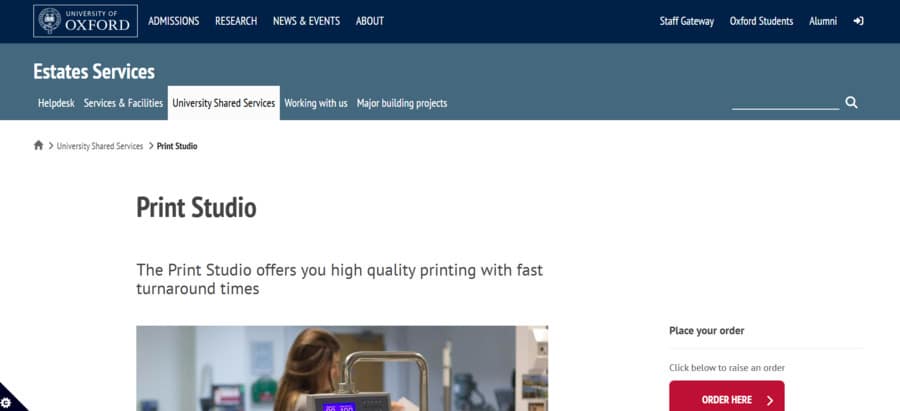
7. University of Oxford Print Studio
The university's own digital print facility, based at Wellington Square. Prints on FSC-certified, carbon-balanced paper and has skilled graphic designers on site. A genuinely high-quality operation.
Who is this Best-Suited For?
University staff, departments, and students who can access the studio through the university network and internal cost centre system.
What Should You Consider Before Choosing?
Not open to independent publishers or the general public without direct arrangement. If you're not affiliated with the university, this one isn't available to you.
How Does Ex Why Zed Compare to Other Oxford Magazine Printers?
To save you some research time, here's how the main options stack up across the things that matter most for a magazine project.
Printer
Magazine Specialist
Binding Options
Print Technology
Free File Check
Paper Samples
FSC / Eco Options
Delivery
Ex Why Zed
Yes
Saddle stitch, perfect, hardback
HP Indigo + Heidelberg litho
Yes, free
Yes, free
Yes, FSC options
Free UK delivery
Printing Oxford (24/7 Print)
No
Saddle stitch, perfect
Digital
Yes
No
Limited
Collection / local
Parchments Print of Oxford
No
Saddle stitch
Digital
Unknown
No
Unknown
Local collection
Mayfield Press
Partial
Multiple options
Digital + litho
Unknown
On request
Yes
Delivery available
Kall Kwik Oxford
No
Multiple options
Digital
Unknown
No
Partial
Local delivery
Media Print Hub
No
Saddle stitch
Digital
Unknown
No
Limited
Delivery available
University of Oxford Print Studio
Institutional only
Multiple options
Digital
Internal support
Internal only
Yes, carbon-balanced
Internal distribution
Note: This is a general guide based on publicly available information. Always check directly with any printer for your specific requirements and current lead times.
How Much Does Magazine Printing in Oxford Cost?
Magazine printing cost in the UK typically ranges from around £0.30 to £3.60 per copy for custom magazines, depending on quantity, page count, size, paper stock, and binding method.
A few things that affect your magazine printing cost:
• Quantity: Larger runs bring the per-copy price down significantly. • Page count: More pages mean more paper and a longer binding process. • Binding method: Saddle-stitching is the more cost-effective option for thinner magazines; perfect binding adds a small premium. • Paper stock: Coated stocks (silk, gloss) cost a little more than uncoated; heavier cover weights add a modest amount. • Size: Standard sizes (A4, A5) are more cost-effective than custom sizes. • Finish: Matt lamination on the cover adds durability and a premium feel for a small additional cost.
Tip: For a more considered magazine with proper paper and colour, you'll generally get better value from a specialist UK printer like Ex Why Zed, where pricing is transparent.
Where Can I Get the Best Single Magazine Printing in the UK?
Printing a single copy of a magazine, whether for proofing, a portfolio, or a one-off edition, is something not all printers handle well. Many have minimum order quantities that make single-copy printing uneconomical.
Ex Why Zed has no minimum order. You can print one copy of a magazine and receive it with the same care, quality, and finish as a run of 500.
If you need single magazine printing near you in Oxford, most local shops will produce one copy, but the finish quality and paper options available at a specialist level are a step up. And with free, tracked UK delivery from Ex Why Zed, location stops mattering.
How Do You Get Started with Magazine Printing in the UK?
If you've got your design ready, here's how the process works with Ex Why Zed. It's straightforward.
Step 1: Get your PDF Ready
You'll need a print-ready PDF with 3mm bleed on all sides, a resolution of at least 300dpi for images, embedded fonts, and CMYK colour mode. If you're new to this, our file setup guides and video walkthroughs cover everything. Take five minutes to read through them before you export your final file.
Step 2: Get a Quote
For 1 to 20 copies, our instant pricing tool gives you an immediate price as you adjust your spec. For larger or more bespoke runs, send us your spec by email: hello@exwhyzed.com, and we'll put a custom quote together, usually the same day. No price tables with dozens of confusing columns.
Step 3: Request Paper Samples
Free, and worth doing for any publication where the feel of the stock matters. Once you've had a read through our guide on choosing the right paper for your publication, you'll know exactly what to ask for. It can save you from a choice you'd regret when the finished copies land.
Step 4: Approve and Go
You can request an optional proof copy before the full run goes to print. It's a good call for a first issue or when colour accuracy is critical. Once you're happy, production starts, and your magazines are with you by free tracked delivery within your agreed lead time.
Order now and get your magazine printing underway today.
Frequently Asked Questions
How much does magazine printing cost in the UK?
Magazine printing in the UK typically costs between £0.30 and £3.60 per copy for custom magazines. The actual price for your project depends on quantity, page count, size, paper stock, and binding. Larger print runs bring the cost per copy down significantly. Ex Why Zed offers an instant pricing tool for small runs and custom quotes for anything more bespoke.
How long does magazine printing take?
At Ex Why Zed, stapled magazines are typically ready in 3 to 4 working days and perfect-bound magazines in 4 to 5 working days, including free tracked UK delivery. Local Oxford same-day printers can turn around basic jobs within hours, but for more considered, creative print, a few days is a more worthwhile timeline.
What is the difference between saddle-stitching and perfect binding?
Saddle-stitching uses staples through the spine. It's the standard approach for magazines up to around 40 pages and is the more cost-effective option. Perfect binding glues pages to a flat square spine, giving a more book-like look and feel. It suits magazines with 40 pages or more.
What paper should I use for magazine printing?
Coated silk or gloss papers suit image-heavy publications where you want colours to pop. Uncoated stocks feel more tactile and work well for photography, art, or editorial-style magazines. A heavier cover stock, around 250gsm or above, gives the magazine structure and a more premium feel. If you're not sure, request free paper samples from Ex Why Zed before you commit.
Can I print just one copy of a magazine?
Yes. Ex Why Zed has no minimum order, so you can print a single copy if that's what you need. It's useful for proofing a design, producing a portfolio piece, or testing paper and format choices before committing to a full print run.
What file format do I need for magazine printing?
A print-ready PDF is the standard. Your file should include 3mm bleed on all sides, a resolution of at least 300dpi for images, embedded fonts, and CMYK colour mode. Ex Why Zed checks your file free of charge before printing and flags any issues before the job goes to press.
Is it better to use a local Oxford printer or an online UK printer for magazines?
A local Oxford printer makes sense if you need something on the same day or want to collect in person. For quality, paper choice, creative support, and magazine printing specialism, an online UK specialist like Ex Why Zed often delivers more. And with free UK delivery, location stops being the deciding factor.
Do magazine printers in Oxford offer eco-friendly printing?
Some do. Ex Why Zed prints 100% of its jobs on FSC-certified paper and uses vegetable inks on all litho print runs. Its no-minimum-order policy also means no excess print runs and no unnecessary waste.
What sizes can I print a magazine in?
Standard sizes include A4, A5, and A6. Ex Why Zed also offers square formats such as 210x210mm, and custom rectangle sizes like 40x170mm and 250x176mm, which suit image-led publications.
Can I get a proof copy before printing the full run?
Yes. Ex Why Zed offers an optional proof copy before your full order goes to press. It's a sensible step for a first issue or any project where colour accuracy and paper feel are important. Once you're happy with the proof, production starts on the full run.
What is the best glossy magazine printing option in the UK?
Glossy magazine printing uses coated silk or gloss paper for vibrant colour and a smooth finish. For best results in the UK, choose printers like Ex Why Zed who use HP Indigo digital or Heidelberg litho presses.
So, you’ve poured your heart into designing your magazine—curated the content, nailed the visuals, and now it’s time to bring it to life. But here’s the thing: a magazine isn’t just about what’s on that piece of paper. It’s about how those pages feel, how the images pop, and how the entire piece holds together in a reader’s hands.
Whether you’re publishing a niche editorial, a creative showcase, or a branded magazine for your audience, the final product should reflect your vision with precision and polish. And to do that, every choice matters—from layout planning and paper texture to binding style and print method.
This blog will walk you through that process—what to consider, what to prioritize, and how to bring your magazine from concept to a printed piece that truly connects with your readers. Let's get started!
How to Plan Your Magazine Print?
Before diving into layouts and paper types, start with a clear plan. Define why you’re printing your own magazine, who it’s for, and how much you can spend on diverse fonts. These decisions will shape everything—from design and content to printing choices, ultimately contributing to a consistent professional look.
Nail Your Purpose and Audience Before You Print
Your magazine’s purpose sets the tone. Long before you think on how to print out a magazine, know the purpose behind it. Are you informing, entertaining, promoting, or educating? Once that’s clear, identify your audience—think beyond age and focus on interests, profession, and lifestyle.
For example, if you're creating a fashion magazine, your audience might include style enthusiasts, fashion students, or industry professionals.
Why this matters:
Content stays relevant
The tone matches the reader's expectations
The design feels visually aligned
The better you know your readers, the better your magazine connects with them.
How to Choose the Right Printing Method?
Now that you’ve nailed down your magazine’s purpose and target audience, it’s time to tackle a big decision: how to print a magazine at home. Your printing method will affect everything—from cost and turnaround time to image quality and paper feel.
While there are multiple printing techniques, most magazine projects come down to two heavy hitters: digital and offset printing. Each has its perks and trade-offs, and the best choice depends on your project’s size, timeline, and quality expectations.
1. Digital Printing
Digital printing is the go-to option for smaller print runs and tight deadlines. It works a lot like your home printer—just way more advanced. Files are sent straight from your computer to the printer, skipping the whole plate-making process.
It’s fast, flexible, and affordable—especially when you're not printing thousands of copies. And while offset printing still holds the crown for razor-sharp image quality, most readers won’t spot the difference in a well-executed digital print. The key is using the right paper and thickness to elevate the final product.
Aspect
Description
Speed
Faster setup and quicker print turnaround
Quality
High-quality prints with minimal compromise
Cost-Effective
Ideal for smaller quantities; lower upfront cost
2. Offset Printing
Offset printing is the old-school master of volume. It’s a bit more of a process—creating plates and transferring ink via rubber blankets—but the result is hard to beat. If your magazine has a high page count or you’re printing in bulk, the offset is likely the more cost-effective route.
The real win here is precision. Offset delivers crisp, vibrant prints with zero smudging or toner streaks. It's the method major publishers swear by for glossy magazines. Just know: it’s slower to set up and usually not worth it for short runs.
Aspect
Description
Speed
Longer setup time; better for scheduled runs
Quality
Exceptional image clarity and color fidelity
Cost-Effective
Best value for large-volume print jobs
No matter which printing method you choose, Ex Why Zed's Magazine Printing Service has got you covered. From rich satin paper (300 gsm cover, 130 gsm inside) to expert binding, we make your vision print-perfect.
Just upload your PDF, and we’ll handle the rest with lightning-speed turnarounds—3 days for stapled, 5 for perfect bound. Need a few copies? Instant pricing makes it simple and hassle-free.
Additionally, with free paper samples, file checks, and actual humans on standby, we don’t just print—we impress.
What Is the Standard Magazine Size?
When we talk about standard magazine size in the U.S., 8.5 x 11 inches is the industry go-to. It’s familiar, print-friendly, and fits neatly into shelves, bags, and mailers, making it a practical choice for both readers and distributors.
Internationally, the A4 size (8.27 x 11.69 inches) dominates. It’s slightly taller and narrower than the U.S. standard, offering a sleeker visual appeal. Many global brands prefer A4 for its compatibility with design templates and cost-efficient print setups outside the U.S.
Other formats, like digest size (5.5 x 8.5 inches), are gaining traction for niche or budget-friendly publications. They’re portable, cheaper to print, and ideal for zines, how-to guides, or compact lifestyle mags targeting younger, on-the-go audiences who crave convenience without sacrificing content quality.
How Long Does it Take to Print a Magazine?
The timeline for printing a magazine greatly depends on key factors such as the volume, the printing option you chose, and the complexity of your magazine's design and layout. Short-run printing jobs involving around 1,500 - 2,000 copies generally can expect faster turnaround times due to less demanding equipment setup.
On the other hand, more significant projects requiring more than 2,000 copies usually take more time due to the detailed setup of offset printing. However, digital printing offers faster turnaround times even for substantial projects in scenarios where speed overrules cost.
What Are the Factors That Influence the Cost of Printing?
Print volume and method significantly affect your magazine’s cost, but they’re just the beginning. Several other elements quietly shape your final price tag, including paper type, page count, and binding style. Each choice you make adds up—visually, tactically, and financially. Let’s break down these factors so you can plan smarter.
1. Paper Choices
The paper you pick isn’t just about feeling—it’s about first impressions. Want something sleek and photo-forward? Gloss paper delivers punchy colors and crisp images for your artwork. Do you prefer a calmer, high-end vibe? Matte paper mutes the shine and elevates readability for text-heavy layouts. Craving texture? The uncoated paper brings a raw, organic feel that stands out in a digital world.
Just remember: thicker or premium-grade paper costs more, including your cover stock. For example, for 100 copies, ExWhyZed offers A4 Softback (also available in 210x210mm) with both Wire Stitched (Saddle Stitched) and Perfect Bound (PUR) options. You can choose from premium paper with a 300gsm Silk cover and 130gsm Silk satin for the inside pages. All of this for just £135.70.
2. Page Count
Every page adds to your story—and also your invoice. The more content you pack in, the more paper, ink, and time it takes to bring your vision to life. Since one sheet equals two pages (front and back), your total count should ideally be divisible by four—this keeps things printer-friendly and cost-efficient.
Also, don’t overlook the physical bulk. A slim 24-page lookbook and a 100-page feature mag won’t use the same binding—and yes, that matters for pricing, too. Aim for a page count that supports your message without bloating your budget.
3. Binding Options
Binding does more than hold your magazine together—it shapes the entire finish. Saddle stitch (stapled fold) is wallet-friendly and ideal for low page counts, specifically great for smaller magazines under 48 pages. But if you’re going thick or want a polished, bookstore-style feel, perfect bound binding (flat spine) delivers that pro edge.
Choose your binding based on function, aesthetics, and how you want readers to experience your publication, from the first glance to the final page flip.
Print Your Magazine with Confidence — Ex Why Zed Has You Covered
At Ex Why Zed, magazine printing isn’t just a service — it’s a partnership. We guide you through every step, from choosing the right materials to delivering a stunning final product that reflects your vision.
Whether you're producing a niche publication, an art magazine, or a corporate issue, our expert team ensures exceptional quality, sharp color accuracy, and reliable turnaround times.
Ready to bring your magazine to life? Contact us today and let us help you create something truly worth flipping through.
Conclusion
Printing a magazine isn’t just a technical task—it’s a creative journey that blends strategy, design, and thoughtful decision-making. From selecting the proper printing method to choosing the perfect paper and defining the ideal size and page count, each choice shapes the final product’s quality, cost, and impact, especially when considering print magazines as part of the overall strategy, including the use of software like Adobe InDesign for layout design.
By understanding these core elements, you’re not just streamlining your process—you’re setting the stage for a publication that’s visually stunning, cost-effective, and tailored to your audience’s experience. Factor in timelines and prepare for common challenges, and you’re already a step ahead.
The more thoughtfully you plan, the more confidently you’ll produce a magazine that doesn't just inform, but impresses, connects, and leaves a lasting impression.
Frequently Asked Questions
What is the most cost-effective printing method for a magazine?
Digital printing is the most cost-effective for shorter print runs due to its faster setup times and lower initial costs. However, offset printing is often more economical for significant quantities despite the initial setup cost.
How can I reduce costs without compromising quality?
Smartly choosing your paper type, judiciously planning the number of pages, and opting for a cost-effective binding method can help reduce costs. Combine this with an appropriate printing method based on your volume to save costs without sacrificing quality.
Are there alternative materials that help save costs in magazine printing?
Choosing less expensive paper types or reducing paper weight can help minimize costs. However, remember that this might affect your magazine's overall feel and durability.
How do I print a PDF magazine?
You can print a PDF magazine on your Mac by simply sending the PDF file to your printer via email. Ensure your file complies with the printer's specifications, including correct dimensions, bleed settings, a back cover design, and color encoding, to avoid unprinted edges. It is best to confirm these details with your printer before initiating the print.