D-Day 80 Teacher Resource Pack
This A4 landscape teacher pack was built for real handling: classroom tables, staff rooms, and exhibition spaces where resources get passed around fast. The cover leads with a powerful historic photograph and bold “D-DAY 80” typography, setting a clear tone before you even open it.
The British Normandy Memorial produced this pack to support learning and commemoration, with a design that balances impact with clarity. Inside, it moves between maps, background reading, activities and archival material—so the printing needed to keep everything legible, steady and consistent.
If you’re planning something similar, our booklet printing guide is a useful starting point, and our wire stitching set-up guide helps you prep files with confidence.
About the Book
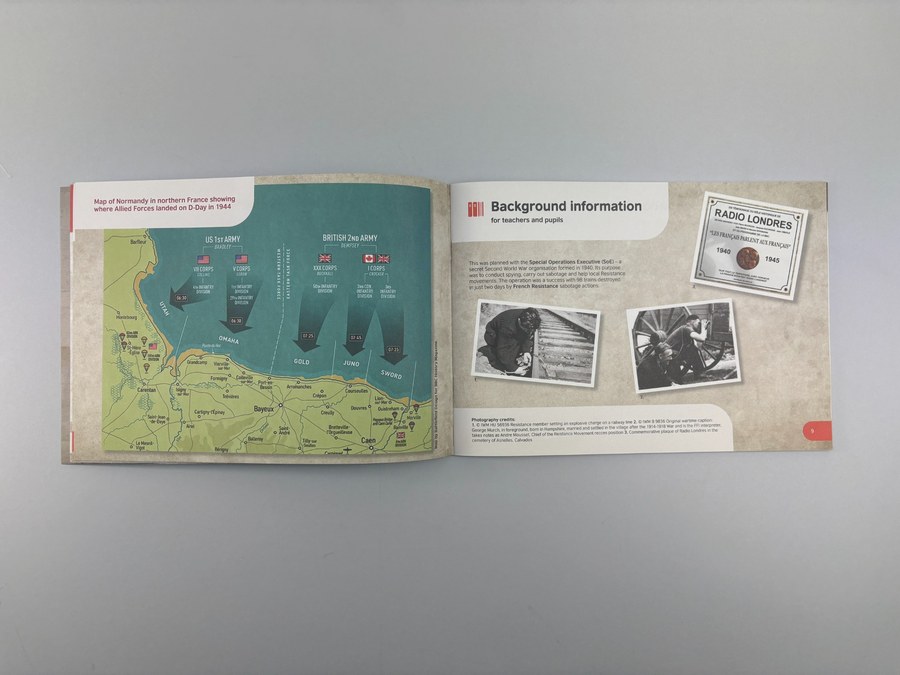
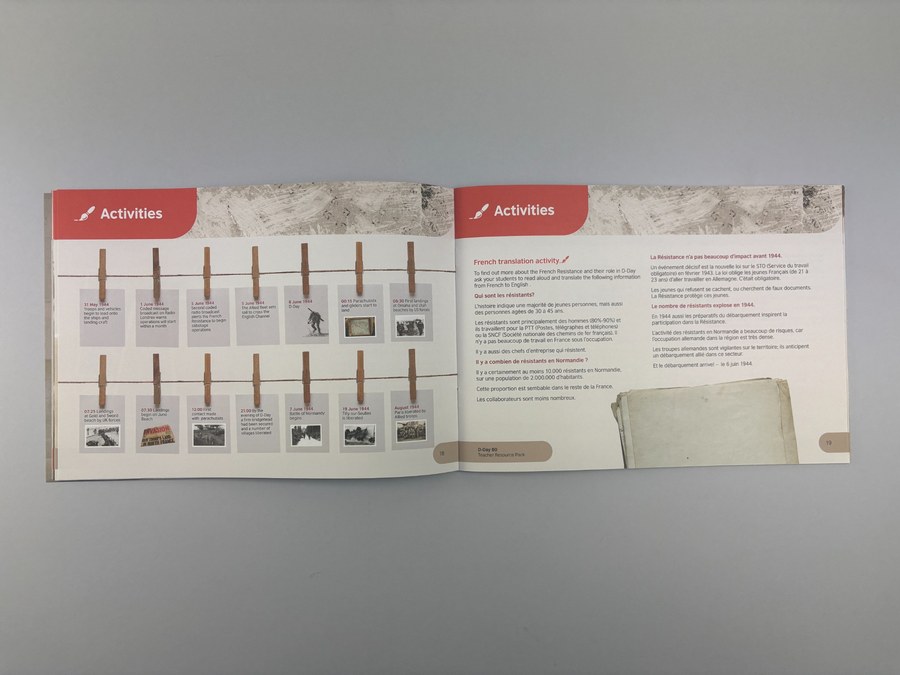
The pack is designed for teachers and pupils, with section headers that are easy to spot at a glance (those red tabs do a lot of work), plus a strong mix of imagery and structured text. Spreads like the Normandy map and the “Activities” pages feel practical and classroom-ready—space to read, space to point, space to discuss.
You can learn more about the memorial itself at britishnormandymemorial.org and the wider context of the landings here: Normandy landings (Wikipedia).
Print Specification & Materials
We printed this as an A4 landscape, wire-stitched booklet—ideal for resource packs because it’s cost-effective, tidy on the shelf, and flips open quickly during a lesson or guided session.
The uncoated stocks suit the subject matter and the educational purpose—easy on the eye for longer reading, with a natural, paper-forward feel. The matt lamination adds scuff resistance on the outside, which matters when booklets are stacked, packed, and handled repeatedly at events.
Want to compare paper feels before you commit? Our paper samples page is a handy reference, and the instant quote calculator is a quick way to explore formats and quantities.
Design Nuances We Loved
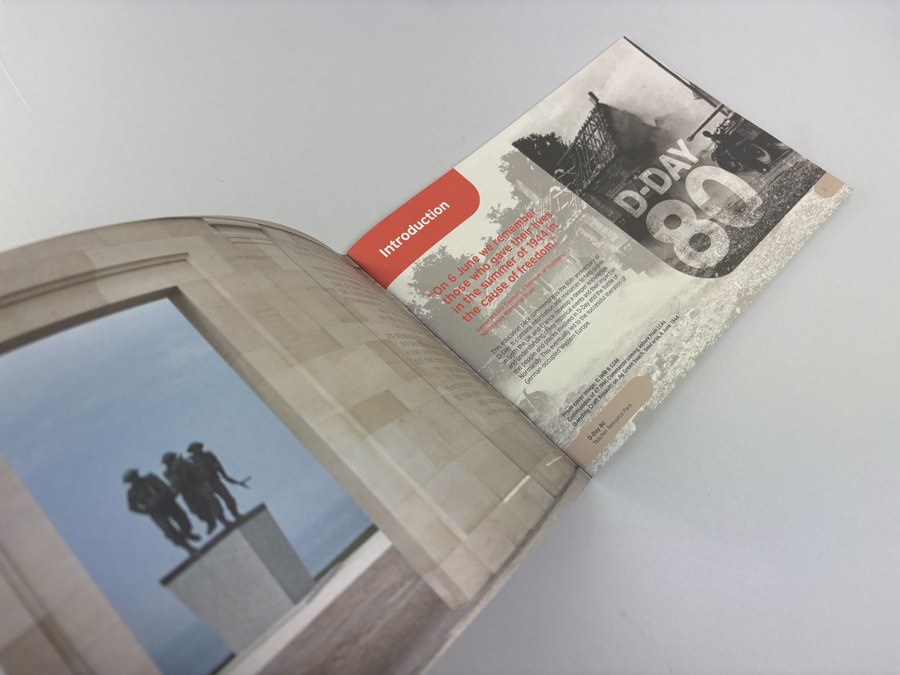
The cover does the big job first: historic image, minimal clutter, and that high-contrast red “80” that reads instantly from a distance—perfect for exhibition tables and pick-up points.
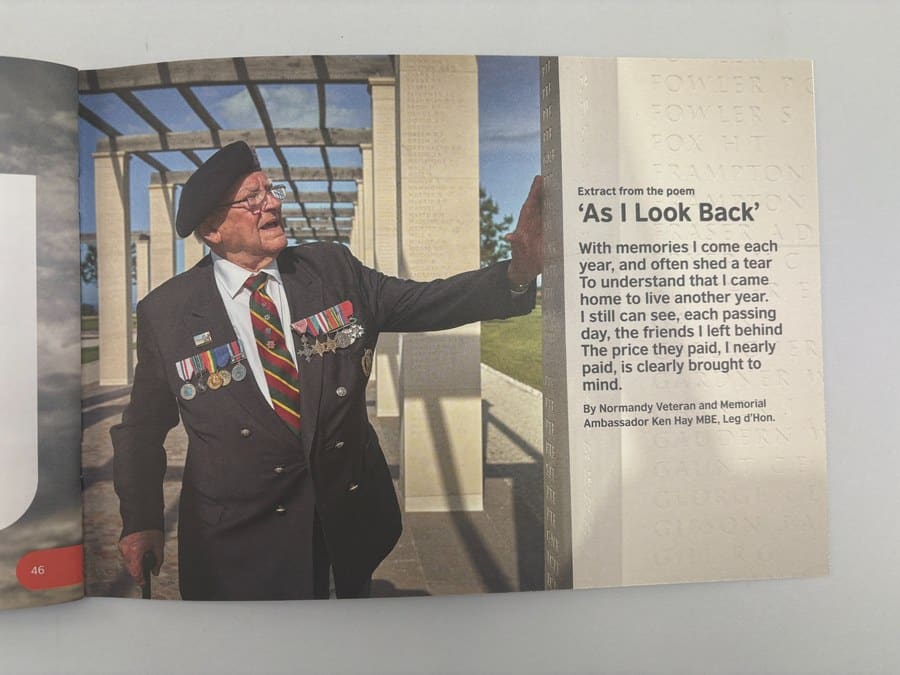
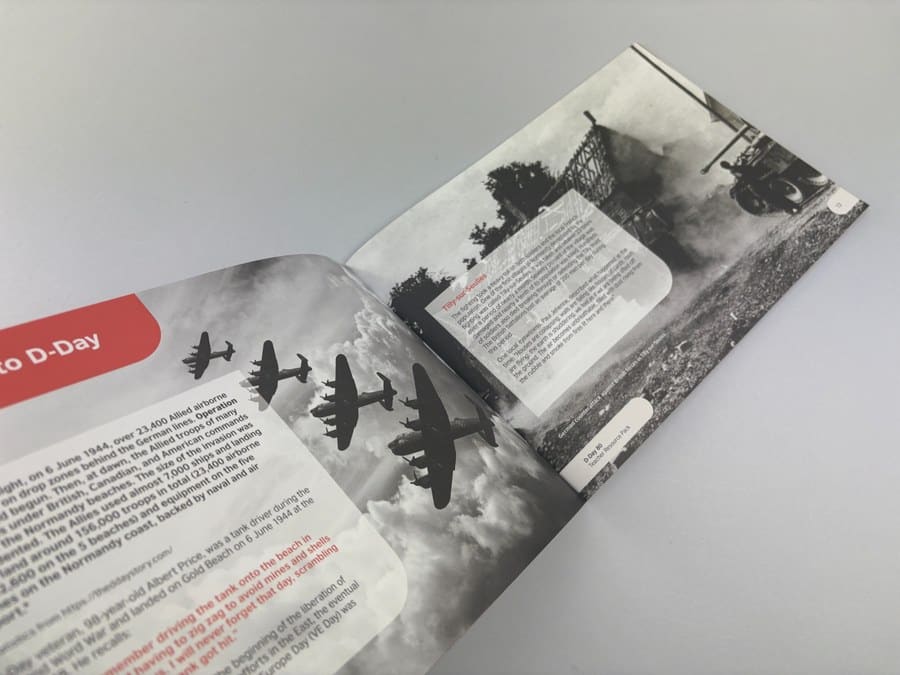
Inside, the layout stays teacher-friendly. Headings are bold and consistent, body text sits in calm blocks, and images are used with purpose—maps for orientation, archive material for human detail, and activity pages that feel ready to photocopy or project.
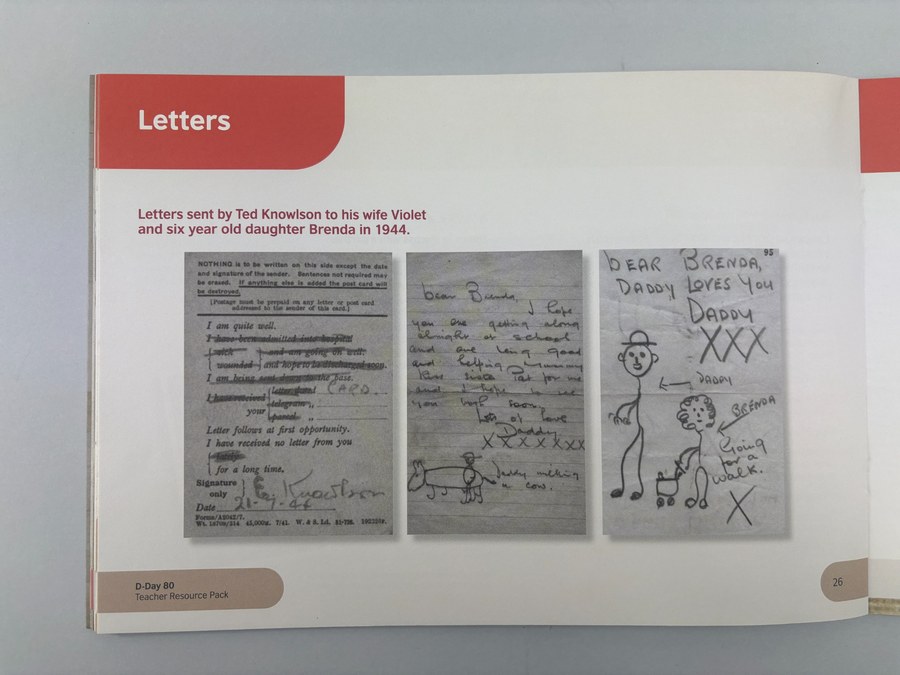
A favourite spread is the letters page: scans and handwriting reproduced cleanly so the emotion comes through without the page feeling messy. It’s a strong reminder that good print isn’t only about colour pop—it’s about legibility and pacing.
The Client’s Print Journey
The first step was a straightforward request for costs and quantities, and we provided a clear quote with options. From there, we kept the process moving with proofing links and practical guidance on checking artwork on a computer screen before approval.
Turnarounds mattered here, and we made sure the client knew what to expect: approval, production, dispatch, delivery. When the finished booklets shipped, the response said it all—fast, reassuring, and exactly what you want when deadlines are looming.
How We Helped
We kept support simple and responsive: quoting quickly, guiding the proof stage, and staying clear about what happens next at each step. For exhibition and education print, that steady communication is often as important as the presswork—because teams are juggling content, stakeholders and event dates all at once.
If you’re building your own exhibition resource pack, our print journey overview explains how we work, and the file set-up knowledge base covers the common gotchas.
Takeaways for Your Next Exhibition Booklet
- Make the cover readable from two metres away: one strong image, one strong title, and confident contrast.
- Use section tabs and consistent headers: teachers (and visitors) skim first, then read.
- Choose uncoated stock for long reading: it’s comfortable, practical, and suits educational content.
- Add protection where it matters: a matt laminated cover helps when booklets are stacked and handled all day.
- Plan page counts early: wire stitching works best when you keep layout and pagination locked before final proof.
Planning a teacher pack, event booklet or exhibition handout? Start with our Printed Project Builder and we’ll help you map the best format for your deadline and budget.