Understanding GSM is crucial for selecting the right paper for your print project.
Higher GSM paper enhances durability, vibrancy, and professional appeal.
For photo prints, 170-250 GSM ensures sharp details and rich colours.
250-400 GSM is ideal for sturdy, premium items like business cards and invitations.
Choosing the right GSM improves opacity and prevents ink show-through on double-sided prints.
Match your GSM choice to the print method for the best results, especially in photo printing.
Ex Why Zed offers premium GSM options, ensuring your prints look and feel professional.
Consider durability, weight, and finish when selecting the right GSM for your print project.
Have you ever found yourself staring at a shelf full of paper, unsure which one is best for your print project? Whether you're printing photos, business cards, or art prints, choosing the right GSM (Grams per Square Meter) can make or break your print's quality. Get it wrong, and you might end up with ink smudges, flimsy pages, or a lacklustre finish.
The problem? Many people overlook GSM when choosing their paper, only to realise too late that it affects everything from durability to vibrancy. If you're looking to create a premium photo print or make your business cards stand out, we've got you covered with the right GSM choices to ensure professional, high-quality results.
In this guide, we'll reveal the secrets behind picking the best GSM for printing paper. By the end, you'll be equipped with the knowledge to choose the perfect paper for your next project, whether it's for photo printing, business materials, or art prints.
What Does GSM Mean in Printing?
Have you ever wondered what GSM means when you see it on paper packaging? GSM stands for Grams per Square Meter, a standard unit of measurement used to define the weight of paper. This figure gives you an idea of how thick or thin the paper is and indicates its durability.
Low GSM paper is lightweight and flexible, making it ideal for everyday printing such as flyers, leaflets, and notebook pages. It's easy to handle, folds smoothly, and is cost-effective for high-volume projects where thickness and rigidity are not a priority.
High GSM paper, on the other hand, is thicker and more durable, giving a premium look and feel. It's commonly used for business cards, postcards, brochures, and photo prints where strength, vibrancy, and a professional finish matter most.
How GSM Relates to Paper Thickness and Weight?
The GSM of paper directly influences both its thickness and weight. Essentially, the higher the GSM, the thicker and heavier the paper will feel in your hands. For instance, a 90 GSM sheet feels lightweight, perfect for everyday documents, while a 300 GSM sheet has a much denser and more premium feel.
This difference in paper thickness not only affects the physical feel of the paper but also its durability and opacity. A thicker paper provides more rigidity, which helps prevent it from tearing or crumpling easily. It also provides better opacity, ensuring there’s less chance of ink showing through when printing on both sides of the page.
The relationship between GSM, thickness, and weight is also crucial for print quality. Thicker paper holds more ink, allowing for richer colours and sharper details, especially for photos and art prints. Whether you're printing business materials or photo books, selecting the right GSM ensures your prints look polished and professional.
What Are GSM Paper Types and How Are They Used?
Selecting the correct GSM for your printing project ensures the best results. The GSM influences paper thickness, durability, and suitability. Below is a breakdown of common printing paper types GSM, and their ideal uses:
GSM Range
Paper Type
Ideal Uses
80-100 GSM
Standard Office Paper
Everyday office printing (documents, reports, letters). Cost-effective and lightweight, suitable for high-volume use.
120-160 GSM
Premium Stationery
Professional applications (letterheads, brochures, flyers). Offers a high-quality feel for formal business and promotional materials.
170-250 GSM
Photo and Art Paper
Ideal for photo printing and art prints. Provides a thicker paper that enhances vibrancy, prevents ink bleeding, and ensures sharp, long-lasting prints.
250-400 GSM
Cardstock
Perfect for durable items (business cards, postcards, invitations). Offers premium quality and a sturdy, professional feel.
For the perfect GSM paper for your project, trust Ex Why Zed. We offer a wide selection of high-quality papers to ensure your prints look professional and feel premium every time. Reach out to us today for expert guidance and personalised recommendations!
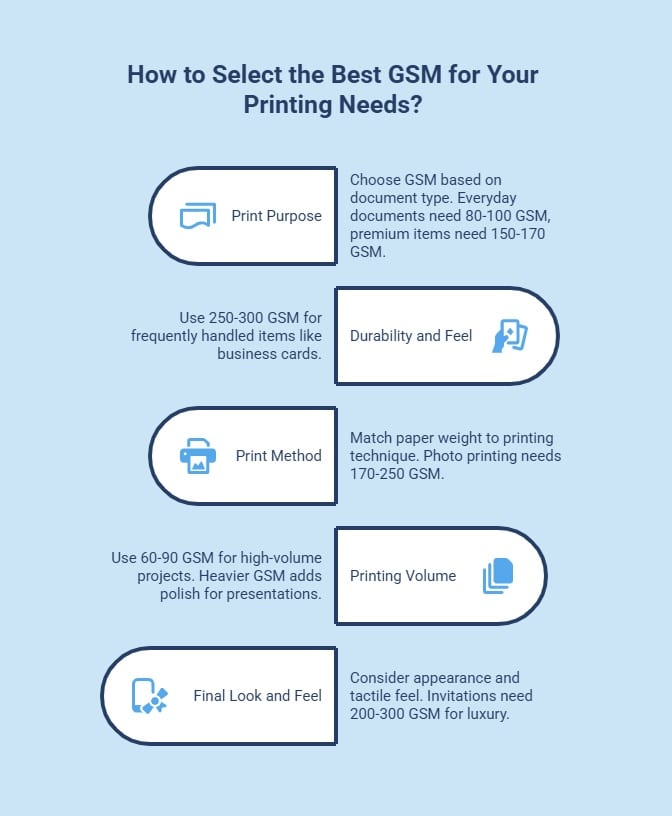
How to Select the Best GSM for Your Printing Needs?
Choosing the best GSM paper for photo printing project is crucial to ensuring it meets both practical and aesthetic needs. Here are some key factors to consider when selecting the best GSM for your printing needs:
Consider the Purpose of Your Print: The type of print material will guide your choice of GSM. For everyday office documents, an 80-100 GSM paper will suffice, but for more premium items like brochures or invitations, you should opt for a heavier GSM paper (e.g., 150-170 GSM).
Think About Durability and Feel: For materials that will be handled frequently, such as business cards or postcards, consider using 250-300 GSM paper. This weight offers increased durability and ensures the final product feels sturdy and high-quality.
Match the Paper to the Print Method: Different printing techniques may require specific GSM weights for the best results. Photo printing, for example, works best with 170-250 GSM paper to maintain sharp details and vibrant colours.
Factor in the Printing Volume: For high-volume printing projects like newsletters or internal reports, 60-90 GSM is cost-effective and ideal for bulk printing. However, for projects that require a more premium finish (e.g., client presentations), a heavier GSM will add the polish you need.
Evaluate the Final Look and Feel: Consider the appearance and tactile feel of your printed material. For invitations or art prints, 200-300 GSM paper will provide the luxurious feel and finish needed for high-end materials.
Need expert advice on selecting the best GSM paper for printing project? Contact Ex Why Zed today for personalised guidance and access to our premium range of GSM papers that will ensure your prints stand out with exceptional quality!
What Are the Benefits of Higher GSM Paper?
Opting for higher GSM paper can significantly improve the overall quality and impact of your print materials. Here are the key benefits that come with choosing thicker paper:
Increased Thickness for a Luxurious Feel: Higher GSM paper feels thicker and more substantial, creating a premium tactile experience. This added weight immediately conveys quality, making it perfect for high-end business materials or special events like invitations and wedding stationery.
Superior Opacity and Reduced Show-Through: Thicker paper provides better opacity, meaning less ink shows through to the other side. This is particularly important for double-sided printing, ensuring that text and images remain sharp and clean without being visible from the reverse side.
Improved Rigidity and Stability: Higher GSM paper is more rigid and resistant to bending. This makes it ideal for materials that need to withstand handling or mailing, such as postcards, brochures, or presentation folders, while keeping their shape intact.
Enhanced Professional Perception: Using thicker paper elevates the perception of your brand or project. Whether it’s for business cards, flyers, or marketing brochures, the use of heavier paper instantly gives a more professional appearance and leaves a lasting impression on recipients.
Better Performance in Specialty Printing: Higher GSM paper works well with specialty printing techniques, such as embossing, debossing, or foil stamping. The added thickness allows for cleaner impressions and a more refined finish, making it a top choice for luxury print projects.
How Do You Choose the Right GSM for Art Prints and Photos?
When selecting the right GSM for your art prints and photos, it's essential to match the paper weight to the specific needs of your project. Below are the ideal GSM ranges for different printing applications and why they work best:
1. Photographs and Fine Art Prints
Ideal GSM Range: 170-250 GSM This GSM range is perfect for photo and fine art prints as it enhances the vibrancy of colours and prevents ink bleeding. The thicker paper also ensures long-lasting prints that retain their sharpness and professional finish.
2. Posters and Large Format Prints
Ideal GSM Range: 200-300 GSM Heavier GSM paper offers greater rigidity and durability, making it ideal for large posters or fine art posters. It ensures the prints maintain their shape, even after being handled or displayed, without warping or creasing.
3. Art Books and Catalogues
Ideal GSM Range: 170-300 GSM For art books and catalogues, a higher GSM range is ideal as it ensures durability while maintaining a refined, professional appearance. The thicker paper prevents warping and helps the artwork or photography stand out with a crisp, clear finish.
4. Greeting Cards and Invitation Cards
Ideal GSM Range: 250-350 GSM The thicker paper gives greeting cards and invitations a premium feel while ensuring they are sturdy and durable for mailing. It creates a luxurious tactile experience and makes the cards more resistant to damage during handling.
What Makes Ex Why Zed Your Ideal Printing Partner?
When it comes to high-quality prints, the right choice of paper can make all the difference. Ex Why Zed offers a diverse range of premium GSM paper options, from business cards to art prints and marketing materials. With our FSC-certified papers, you can rest assured that your project is not only of superior quality but also sustainably produced.
With fast turnaround times and free paper samples, we offer you the chance to test different paper types before committing to a large print run. Whether you need small or large volumes, Ex Why Zed provides expert advice and ensures your project meets the highest standards. From high-volume newsletters to luxury invitations, our tailored solutions cater to your unique requirements.
Looking for custom sizes and no minimum order limits? Ex Why Zed handles both digital and litho printing with cutting-edge technology, ensuring you get the best value without compromising on quality.
The GSM you choose can transform a simple print job into something extraordinary. It's not just about weight; it's about giving your material the right texture, durability, and professional edge. From premium business cards to stunning photo prints, selecting the right GSM ensures your project stands out and leaves a lasting impression.
Don't let the wrong paper hold back your creativity; the right GSM can elevate your work and convey the message you want to share. Now that you know how GSM impacts your prints, it's time to put that knowledge into action. Choose the paper that fits your vision and take your print materials to the next level today.
Frequently Asked Questions
Does a higher GSM always mean better printing results?
Not always. Higher GSM offers durability and a premium feel, but the best results depend on the project. For business cards, a high GSM is ideal, while lighter paper is better for multi-page booklets. Finish also matters.
What's the difference between 100 gsm and 170 gsm paper?
100gsm paper is thicker than standard office paper, ideal for presentations. 170gsm is heavier, bordering on cardstock, providing a more substantial feel, perfect for premium flyers, posters, and brochure covers for professional-grade prints.
Which GSM paper works best with inkjet printers?
Inkjet printers work best with paper designed for them. 90-120gsm paper is ideal for documents, while 170-250gsm photo paper ensures vibrant colours and sharp details. Ex Why Zed offers premium inkjet-friendly paper for exceptional results.
What is the normal GSM for printing paper?
Normal printing paper GSM typically ranges from 80 to 100 GSM. This weight is perfect for everyday office tasks like documents, reports, and letters. It offers a lightweight feel and is ideal for high-volume printing.
How does the GSM of paper impact printing paper quality?
Printing paper quality GSM directly affects the thickness, opacity, and durability. Higher GSM papers, such as 170-250 GSM, provide better colour vibrancy and prevent ink show-through, making them perfect for high-quality prints like photos and brochures.
How do I choose the right GSM based on a printing paper thickness GSM chart?
A printing paper GSM chart helps determine the best paper weight for your project. For everyday office printing, 80-100 GSM is ideal, while 170-250 GSM is perfect for photo prints and 250-400 GSM works best for business cards and invitations.
What GSM should I use for professional-looking flyers?
For premium flyers, 130-170gsm is perfect. It provides a sturdy feel without being too rigid, making your flyer stand out. Ex Why Zed offers top-quality GSM options for professional-grade flyers with the right balance of durability and quality.
Does the finish of the paper matter more than the GSM?
Yes, the finish plays a significant role. A glossy finish enhances vibrancy and sharpness, while a matte finish provides a more refined, elegant look. The right combination of GSM and finish is crucial for high-quality prints.
Can standard 80gsm paper be used for double-sided parting?
Yes, standard 80gsm paper can be used for double-sided printing, but it may result in some show-through depending on the design and ink coverage. For a more professional finish, consider using thicker paper to prevent bleed-through.
How can I ensure my prints don't get smudged with higher GSM paper?
Higher GSM paper is thicker and absorbs ink better, reducing the risk of smudging. To prevent smudging, always allow prints to dry completely. Additionally, use high-quality ink and ensure your printer is compatible with thicker paper types.