


Key Highlights
- Zines prioritise creative expression, community building, and the exchange of ideas beyond mainstream media and commercial interests.
- Comics are a powerful medium for structured storytelling, built around sequential panels, pacing, and narrative clarity.
- The key difference is intent, with zines embracing content diversity and an imperfect nature, while comics focus on cohesive story development.
- Comic zines blend DIY creative culture with visual narrative, accessible to both a complete beginner and an experienced artist.
- Design choices matter, especially comic zine font selection and small dimensions that affect readability and tone.
- Production strategy differs, with zines favouring short, flexible runs and comics often aligning with broader distribution goals.
- Ex Why Zed offers tailored UK printing solutions for both zines and comics, supporting independent creators at every stage.
If you are planning a print project and feel unsure whether it should be a zine or a comic, you are not alone. Many UK creators blur the lines between the two, especially when experimenting with visual storytelling and self-publishing.
The confusion often begins with format. Both can be illustrated. Both can be independently produced. Both can be printed in small runs. However, their structure, purpose, and audience expectations differ more than many first-time creators realise.
In this guide, you will understand the real differences between a zine and a comic, how comic zines fit into the UK creative scene, which fonts and print specifications work best, and how to choose the right format for your project.
What Is a Zine?


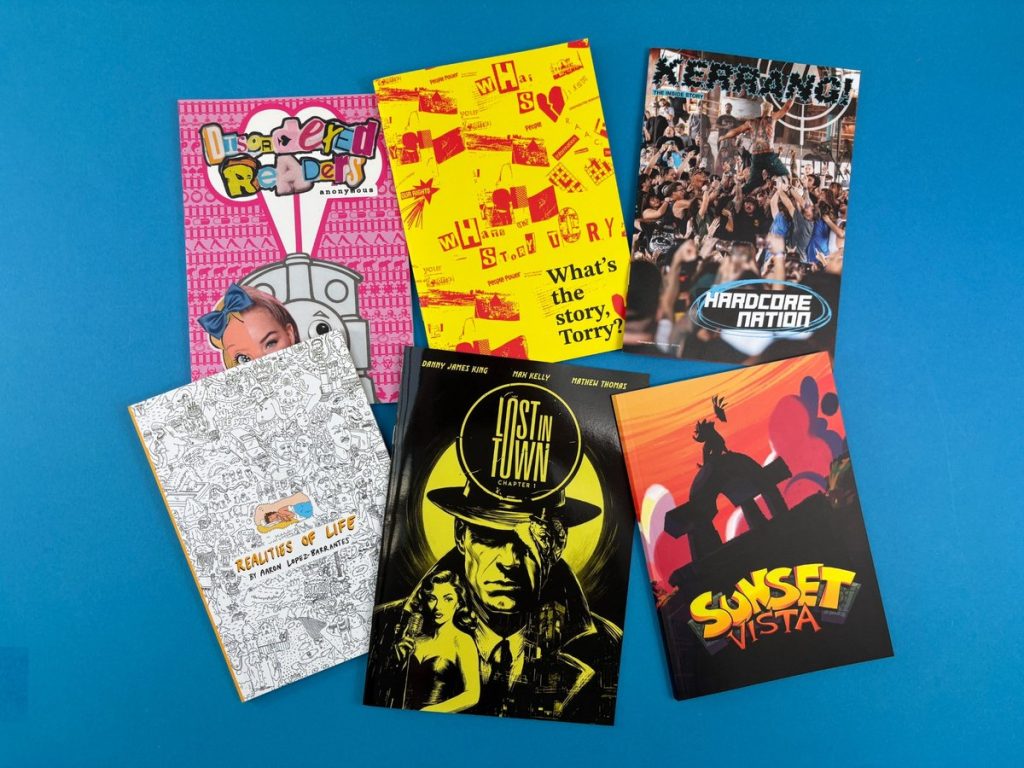
A zine, short for fanzine, is a small, self-published booklet created independently, usually in limited print runs. It is rooted in DIY culture and prioritises creative freedom over commercial goals.
Zines are often produced using accessible tools such as photocopiers, home printers, or short-run digital printing. Because there are no strict rules, creators can experiment with layout, tone, and content.
Typical features of a zine include:
- Small circulation
- DIY production
- Flexible structure
- Personal, political, or niche themes
- Stapled or folded binding
Historically, zines emerged from early science fiction fan communities and later became central to punk and alternative culture in the 1970s and 80s. They continue to provide a platform for independent voices and community-driven publishing.
Want to take your project from idea to print? Explore our practical guide on how to print a zine and learn the production steps, paper choices, and binding options that bring your vision to life.
How Did Ex Why Zed Print So Young Magazine’s 50th Issue?


So Young Magazine’s 50th issue demonstrates how an independent publication can achieve premium print quality while retaining a bold creative identity.
Print specs: 245 x 172mm format, 200gsm uncoated cover, 56pp on 120gsm uncoated text, full colour throughout, wire stitched binding.
Featuring a striking neon cover and clean interior layouts, the issue balanced visual impact with readability. Despite tight deadlines, Ex Why Zed ensured smooth production, on-time delivery, and added 50 complimentary copies to celebrate the milestone.
What Is a Comic?
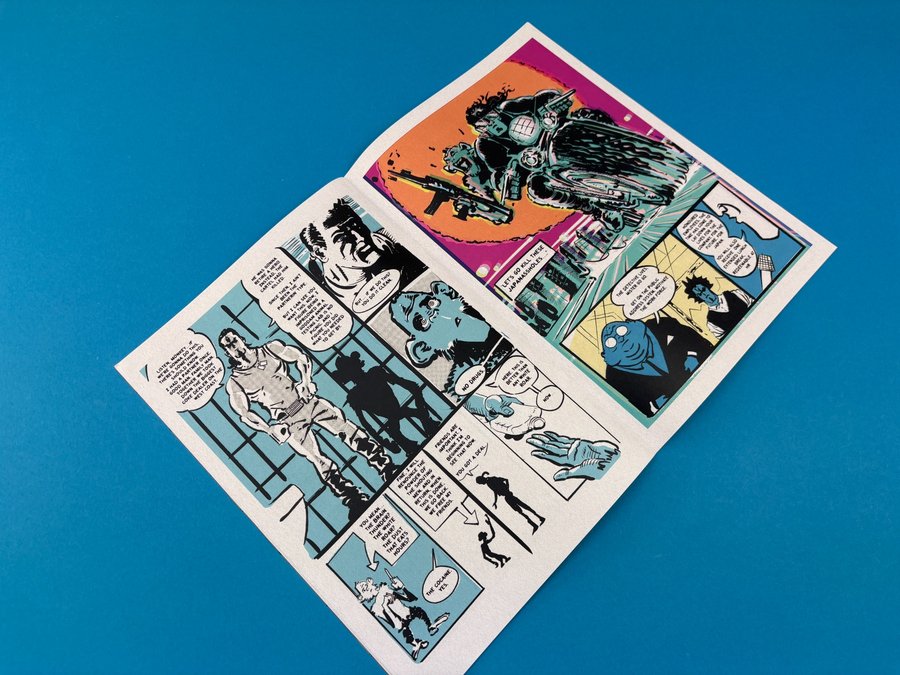
A comic is a storytelling medium that uses sequential images, often combined with text, to convey narrative. Its defining feature is structured visual progression through panels.
Comics rely on:
- Sequential panel layout
- Narrative continuity
- Speech bubbles and captions
- Defined characters and plot development
While many associate comics with superheroes, the format includes memoir, journalism, literary fiction, and experimental work.
Unlike most zines, comics are frequently produced for wider distribution. They may appear as single issues, ongoing series, or graphic novels, and are often supported by established publishing and retail networks.
In short, zines prioritise independent expression, while comics prioritise structured storytelling.
How Was 'It Came From Beyond the Stars' Printed by Ex Why Zed?
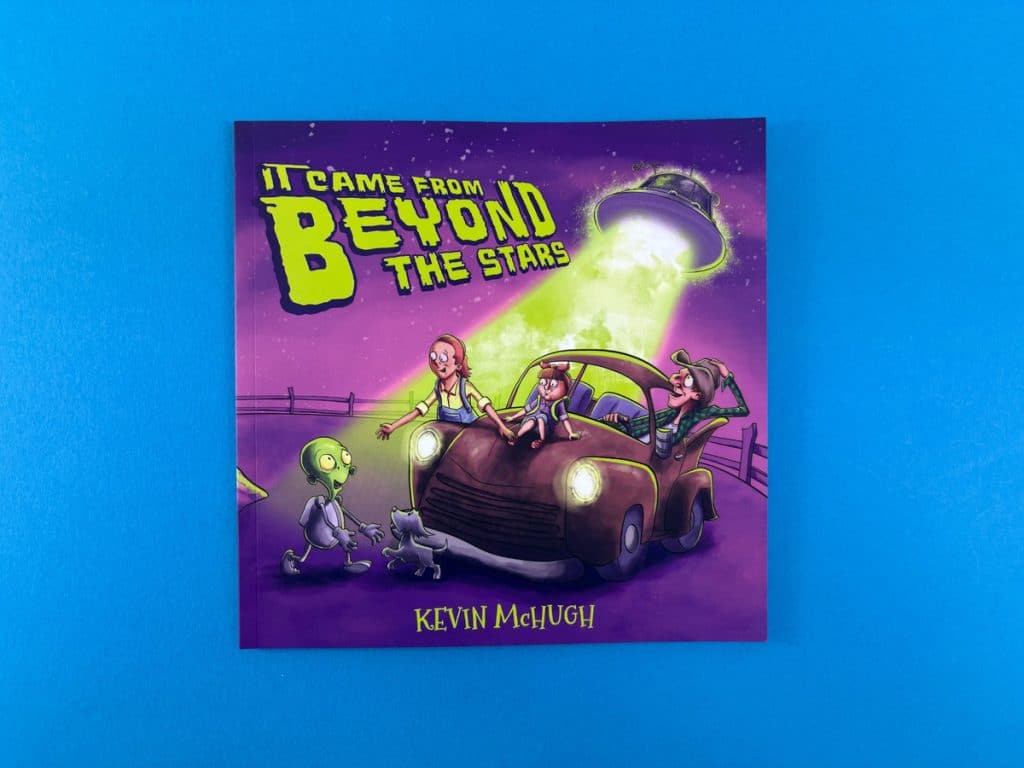
Kevin McHugh’s self-published comic, It Came From Beyond the Stars, shows how a visually bold story can be elevated through thoughtful print production.
Print specs:
210 x 210mm square format
300gsm silk cover with matt lamination
36pp on 170gsm silk
Full colour throughout
3mm spine
Perfect bound
The square format allowed cinematic spreads and poster-style compositions to stand out. Silk stock enhanced colour depth, while matt lamination added durability for conventional sales.
With a tight festival deadline, Ex Why Zed confirmed spine width, provided transparent quotes, supplied digital proofs, and delivered 300 copies on schedule for Enniskillen Comic Fest.
This project highlights how professional materials, binding, and print guidance transform a self-published comic into a bookshop-ready graphic title.
Zine vs Comic: What Are the Key Differences?
At first glance, zines and comics can look similar. Both may feature illustration, short print runs, and independent creators. However, once you examine creative intent, structure, audience positioning, and distribution in relation to current events, the differences become far clearer.
The table below breaks this down in practical terms for UK creators deciding which format best suits their project.
| Category | Zine | Comic |
|---|---|---|
| Core Purpose | Built around self-expression, idea sharing, and creative experimentation. Often non-commercial and community-focused. | Built around structured storytelling designed to engage readers and sustain interest across issues or volumes. |
| Creative Intent | Personal, independent, and exploratory. Prioritises authenticity over market expectations. | Narrative-driven and reader-oriented. Prioritises clarity, pacing, and story development. |
| Narrative Structure | Flexible or optional. May include essays, poetry, photography, collage, or illustration without a defined storyline. | Defined by sequential art. Panels guide readers through a clear beginning, middle, and end. |
| Layout & Panel Design | Free-form layouts with varied formatting. Panels are not required. | Structured panel grids that control pacing and visual flow. Panels are essential. |
| Art Style | Can vary widely from hand-drawn sketches to collage, photography, or mixed media. Style is experimental and unrestricted. | Usually consistent and cohesive to support narrative clarity. Character design and visual continuity are important. |
| Tone & Aesthetic | Often raw, intimate, and handmade in feel. Imperfection can be intentional. | Typically polished and consistent to support narrative readability. |
| Audience Positioning | Niche communities or specific cultural groups. Smaller but deeply engaged readership. | Broader readership, often genre-based, from independent fans to mainstream markets. |
| Distribution Channels | Zine fairs, independent bookshops, creator websites, art festivals, small print batches. | Comic shops, conventions, online retailers, and formal distribution networks. |
| Commercial Orientation | Frequently passion-driven with little expectation of profit. | Often commercially structured, especially within established publishing systems. |
How Do Printing Specifications Differ?


Once you move into production, the difference between a zine and a comic becomes practical. The format you choose determines whether you are optimising for experimentation or scalability.
1. Binding and Format Options
Binding signals intent. It shapes lifespan, presentation, and where your publication can realistically be sold.
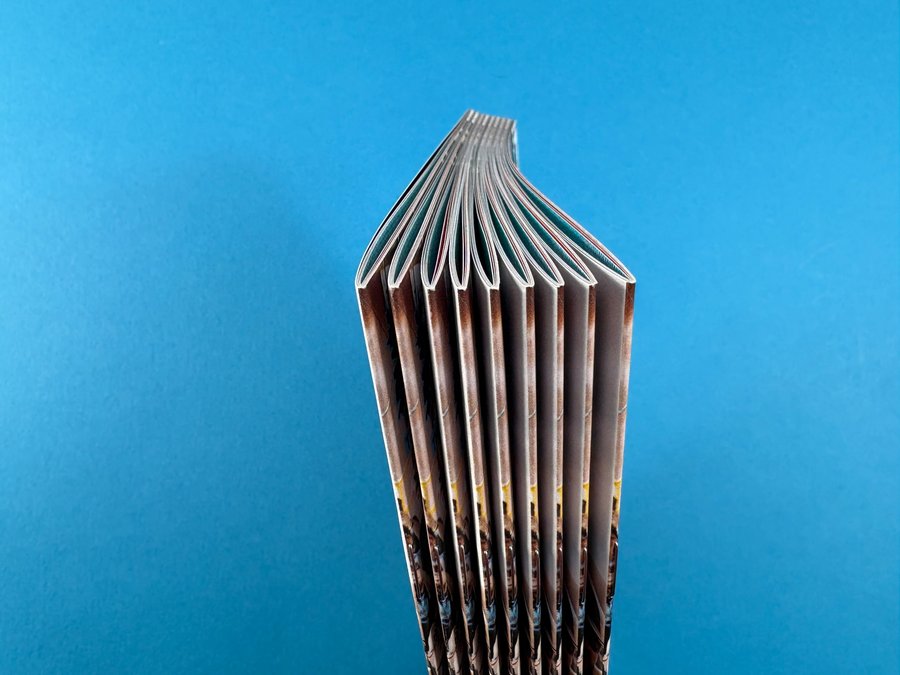
Zines prioritise flexibility and low-cost assembly. Most use saddle stitching or folded formats, allowing small batch production and creative freedom.
Common zine traits:
- Stapled spines
- Flexible trim sizes
- Experimental formats that embrace digital tools
- Experimental formats
This approach supports agility and low financial risk.
Comics follow more standardised formats, especially for retail. Single issues are saddle-stitched, while graphic novels use perfect or case binding for durability.
Comic production typically ensures:
- Consistent sizing
- Shelf-stable spines
- Professional presentation
- Long-term durability
Structure matters more when distribution expands.
2. Paper Stock and Cover Choices
Paper affects perceived value and artwork clarity, and there are different types of paper that can impact this.
Zines often use uncoated, cost-effective stock. Texture and minor imperfections are part of the aesthetic, especially in black and white interiors.
Zine paper choices often include:
- Lightweight interiors
- Matte finishes
- Budget-driven selection
- Minimal coating
The emphasis is on accessibility.
Comics, particularly colour-heavy ones, require stronger reproduction standards. Gloss or silk interiors enhance vibrancy, while covers use heavier coated cardstock for protection.
Comic paper strategy usually prioritises:
- Sharp line clarity
- Colour depth
- Consistent weight
- Retail durability
Quality control becomes essential at scale.
3. Print Runs and Cost Considerations
Volume defines the economic model.
Zines are typically printed in runs of 10 to 100 copies. This keeps upfront investment low and allows easy iteration.
Zine economics focus on:
- Small batch production
- Low financial exposure
- Community distribution
- Flexible reprints
Comics operate at larger scale. Print runs may reach hundreds or thousands, reducing unit cost but increasing financial commitment.
Comic production planning involves:
- Sales forecasting
- Volume-based pricing
- Retail distribution
- Margin planning
Printing specifications are not technical details. They reflect strategy. Zines optimise for flexibility and experimentation. Comics optimise for durability and market readiness. Your production choices should align with how you intend to distribute and position your work.
Planning your budget next? Discover a detailed breakdown of comic book printing costs, including format, paper choices, and print runs, in our complete UK pricing guide.
Is a Comic Zine a Separate Category?


Yes. A comic zine is a hybrid format that blends structured visual storytelling with the independent, DIY spirit of a zine.
It features sequential art and graphic narratives like a comic, but it is self-published and creatively unrestricted like a zine. Creators keep full control over:
- Story and pacing
- Visual style
- Layout and format
- Print run and distribution
Unlike traditionally published comics, comic zines do not need to follow commercial genre rules. That freedom makes them ideal for:
- Testing new story concepts
- Publishing short runs
- Experimenting with layout
- Building an audience in small press spaces
They combine narrative discipline with creative independence, which is why the format continues to grow in the UK independent publishing scene.
Looking for inspiration before you start designing? Explore these unique zine ideas to spark your creativity and turn your concept into a standout printed publication.
What Font Works Best for a Comic Zine?
Font choice shapes tone and readability. It should support the artwork, not compete with it.
Depending on your style, you might choose:
- A traditional all-caps comic font for a classic feel
- Hand lettering for a raw, personal look
- A clean sans serif for modern or serious stories
However, clarity always comes first. When selecting a comic zine font, ensure:
- It is legible at small sizes
- It prints clearly in black and white
- Speech bubbles are easy to read
- Spacing remains consistent
Test print a sample page before final production. The best font is one that enhances the mood while keeping the story effortless to follow.
Curious about how comic book style influences layout, pacing, and visual storytelling? Explore how professional design choices shape impactful, print-ready comic publications.
Which Format Should You Choose for Your Project?

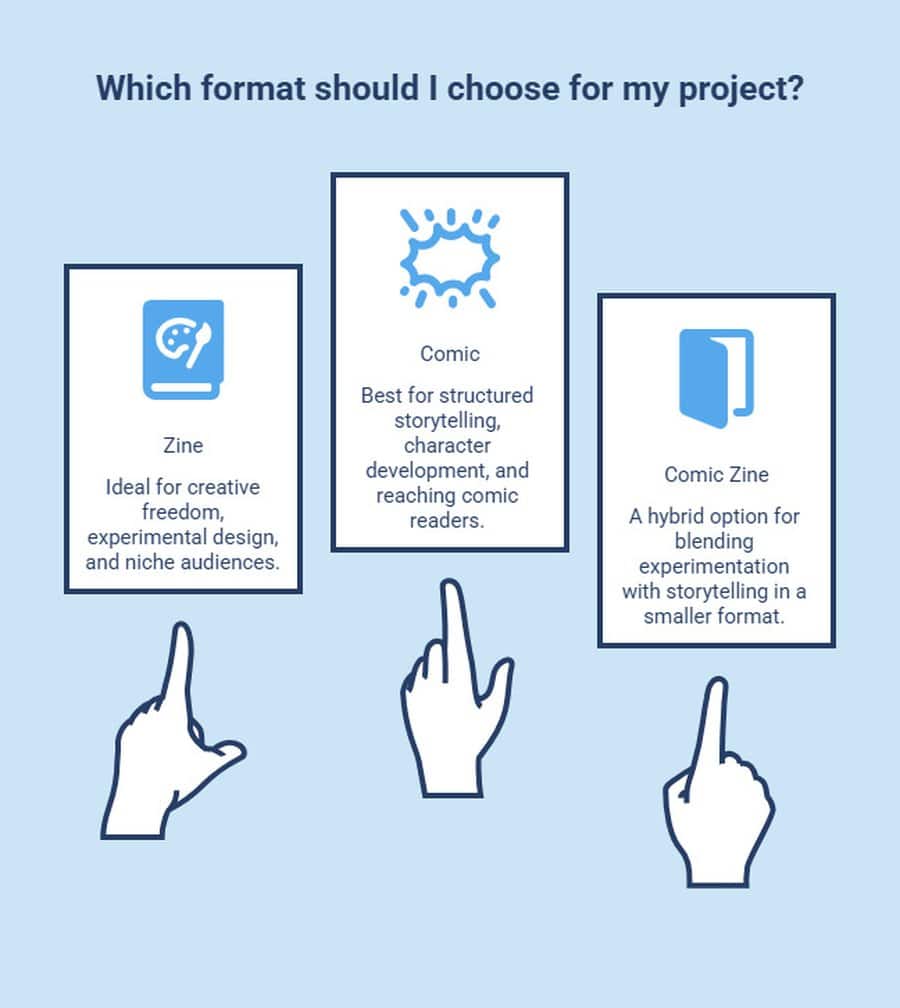
With the differences between a zine and a comic defined, the decision comes down to purpose. The format you choose shapes how your work is structured, printed in various sizes, and received. Before committing, clarify what matters most: creative freedom or narrative structure.
Choose a Zine for Creative Freedom
If your goal is self-expression without formal constraints, a zine is the better fit. It gives you flexibility in layout, tone, and content.
A zine makes sense if you:
- Want an open, experimental page design
- Plan to mix art, writing, and visual elements
- Are you creating for a niche audience
- Prefer small print runs and independent distribution
There is no requirement for structured storytelling. The emphasis is on voice and concept.
Choose a Comic for Structured Storytelling
If you are telling a clear story with character development and plot progression, a comic is more suitable. It relies on sequential panels and deliberate pacing.
A comic is the right choice if you:
- Have a defined narrative arc
- Use dialogue and panel flow to move the story forward
- Want consistency in visual storytelling
- Intend to reach comic readers or retailers
Here, structure supports clarity and reader expectation.
Consider a Comic Zine as a Hybrid
If your project blends experimentation with storytelling, a comic zine can bridge the two. It allows narrative structure within a smaller, independent format.
This works well for short stories, concept testing, or limited runs.
Ultimately, choose the format that strengthens your idea. If the expression leads, choose a zine. If the story leads, choose a comic. The clearer your intent, the stronger your final publication will be.
Comics and graphic novels: from first idea to print-ready format
Every comic project sits somewhere between raw creative spark and disciplined visual storytelling. Our guide to zine vs comic helps clarify the role of each format, especially for creators working with illustration, sequential panels or hybrid publications. A comic often depends on pacing, narrative flow and panel structure, while a zine can allow looser, more experimental expression. Knowing that early helps shape the layout, page count and final printed feel.
From there, the practical decisions start to matter. Our article on how much it costs to print a graphic novel looks at the factors that shift the budget, including trim size, page count, colour, paper and binding. Meanwhile, comic book ideas offers a lively creative starting point for writers and illustrators who need a spark before they begin building a full story. Together, these resources support creators from concept development through to a book that reads well, prints cleanly and feels right in the hand.
Ready to Print Your Zine or Comic?
Choosing between a zine, comic, or comic zine is only the first step in this labour of love. The production quality, along with essential tools, will ultimately shape how your work is read, handled, and valued.
At Ex Why Zed, we help creators move from concept to finished publication with practical print expertise. We can support you with:
- Trim size guidance and format planning
- Binding advice, from saddle stitch to perfect bound
- Paper stock selection for black and white or full colour artwork
- Cover finishes, laminations, and durability options
- Font and layout checks for print legibility
- File setup support, including bleed and margin guidance
- Short-run digital printing or larger volume production
- Advice on cost efficiency without compromising quality
If you are ready to produce a zine, comic, or comic zine that looks as strong in print as it does on screen, contact us and start planning your project with confidence.
Final Thoughts
Zines and comics may appear similar, but their foundations differ. Zines, often referred to as fan magazines, champion independence, flexibility, and community-driven publishing, fostering a closer connection with their audiences and contributing to a rich print culture. Comics prioritise structured storytelling, visual pacing, and reader continuity. Comic zines sit confidently between the two, blending narrative with DIY ethos.
Your decision should reflect your creative intent, audience, and distribution plans. Once that is clear, format, typography, and print specifications naturally follow, ensuring your publication feels cohesive, purposeful, and professionally produced for the creative landscape.
Frequently Asked Questions
How does the purpose of a zine differ from that of a comic?
Zines prioritise independent spirit, low production costs, and a strong sense of community, often emerging from underground communities like punk zines or small groups involved in riot grrrl movements. Comics, shaped by the history of comics and comic books in the early 20th century United States, focus on structured storytelling and a broader reading experience.
What are the best graphic novels of all time and why?
Titles such as Watchmen, Maus, and Persepolis are widely recognised for expanding the history of comics through powerful themes, graphic design innovation, and layered storytelling. Many explore mental health, politics, and identity, earning places in extensive collections across print media and the digital age.
Would you like to learn to create your own comic strips based on personal experiences?
Creating comic strips from personal stories and experience is a valuable resource for self-expression. You can begin with simple design elements and experiment with different formats. Many creators share work through social media or zine festivals, building zine communities and gaining significant momentum.
How do you distinguish between zines and magazines?
Zines are self-published by zine creators with wide creative control, low production costs, and niche circulation within zine communities, often showcasing an artist’s recent works, allowing them to reach a wider audience. Magazines are commercial print media backed by large corporations, designed for wide circulation, advertising revenue, and polished graphic design standards across a variety of topics.
Is it common for zines to include comic-style art or stories?
Yes, many art zines include comic-style storytelling, reflecting crossover within underground communities. From Harlem Renaissance-influenced publications by African Americans to early fanzines and modern comic zines, creators blend independent spirit with narrative structure, producing hybrid works often showcased at zine festivals or on a zine's product page.
Are there any popular examples of zines that are often confused with comics?
Yes. Many comic zines and small press publications blur the line between formats. Short-run illustrated booklets sold at UK zine fairs or indie comic festivals are often mistaken for traditional comics. Titles featuring sequential art but self-published in small dimensions frequently sit between DIY zine culture and structured comic storytelling.