


Key Highlights
- A photographer’s portfolio is a curated collection of the best work, showcasing style, skill, and creative approach.
- Printed portfolios provide a memorable, professional presentation that digital formats cannot fully replicate.
- Selecting strong, purposeful images and sequencing them logically strengthens the overall impact.
- To prepare for a model portfolio photoshoot, select outfits that highlight your strengths, practice a variety of poses, and ensure your hair and makeup are polished yet natural to best showcase your versatility.
- High-quality photobook printing ensures accurate colour, sharp detail, and a polished finish.
- Regular updates keep portfolios current, reflecting recent work and evolving skills.
- Categorising work by niche or project makes portfolios easy to navigate and client-focused.
- Services like Ex Why Zed simplify professional printing, offering premium papers, binding options, and free file checks.
Creating a photographer's portfolio often feels harder than taking the photos. You know you have strong work, yet choosing what to include, keeping everything consistent, and presenting it professionally can be overwhelming. Many photographers worry their portfolio isn’t polished enough to impress clients or galleries, even when their skills deserve attention.
This becomes even more confusing when building a model portfolio, where you need the right balance of headshots, full-length portraits, lifestyle shots, and editorial images to show range. Without a clear plan, it’s tough to create a selection that represents your style while appealing to different opportunities.
This guide removes that uncertainty by showing you how to curate your strongest images, design a clean layout, and choose the best format, including high-quality printed portfolio books. By the end, you’ll know how to create a portfolio that showcases your work with clarity and confidence.
What Is a Photographer's Portfolio and Why Do You Need a Printed One?


A photographer's portfolio is a curated set of their best images that shows their style, strengths, and creative approach. Clients, agencies, and galleries review it to understand your work and decide if you match their brief.
Most photographers start with a digital portfolio, which is great for sharing links quickly, but a printed portfolio book offers something a screen cannot replace.
Here's why a printed portfolio matters:
- Delivers a physical, memorable showcase of your work
- Reflects professionalism and strong presentation skills
- Removes issues linked to screens and device differences
- Supports photographers across niches such as fashion, weddings, and commercial shoots
- Works well for meetings, casting sessions, and gallery submissions


Poor printing can mute colours, blur details, and reduce the overall impact of your images. That’s why many photographers turn to Ex Why Zed for accurate colour, crisp detail, and professional paper options that help their work stand out.
What Are the Different Types of Photographer Portfolios?


A strong photographer's portfolio must reflect the niche you want to work in. Clients expect clarity, consistency, and relevant examples that match their needs. Below are the key types, along with what each one should focus on.
- Modelling Photographer Portfolio: Focuses on clean, versatile images that highlight a model’s expressions, movement, and natural features. Helps agencies assess potential and understand how well the model photographs in different scenarios.
- Wedding Photographer Portfolio: Showcases your ability to capture real moments, emotion, and the full wedding-day narrative across multiple settings. Helps couples evaluate storytelling style and consistency.
- Fashion and Editorial Portfolio: Highlights concept-driven shoots, bold styling, and a strong artistic voice. Ideal for photographers aiming to work with magazines, designers, and creative teams.

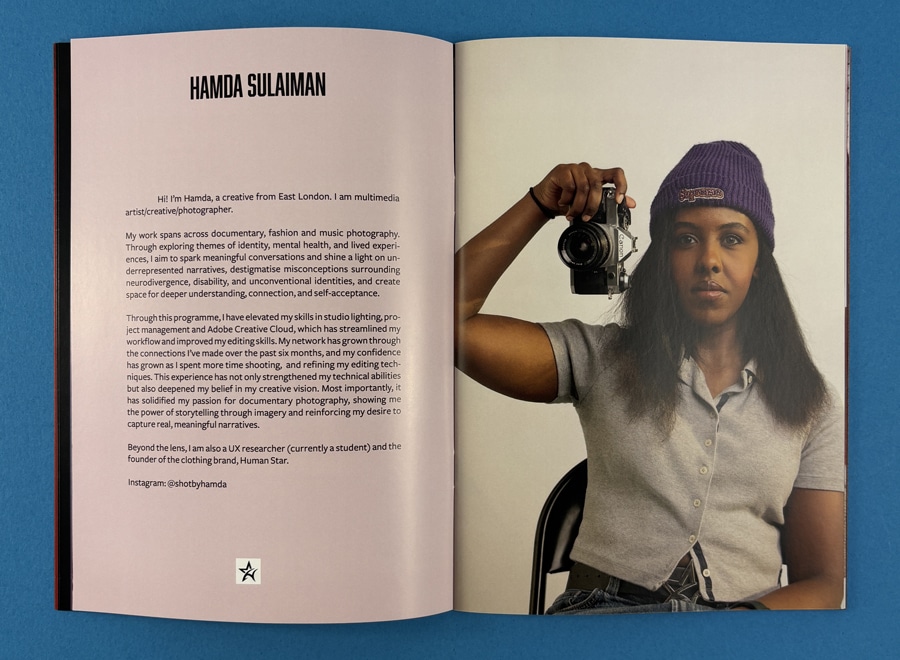
- Commercial Photographer Portfolio: Demonstrates your ability to create visuals aligned with brand goals, including product, lifestyle, and campaign imagery. Shows clients you can follow a brief and maintain technical precision.
- Portrait Photographer Portfolio: Features expressive portraits that reveal personality and depth. Shows your style, your ability to guide subjects, and how effectively you handle both natural and studio lighting.
- Fine Art Photographer Portfolio: Presents cohesive series and personal projects built around a clear artistic vision. Perfect for galleries, exhibitions, and collectors seeking distinct creative voices.
- Travel and Landscape Photographer Portfolio: Captures diverse environments, cultures, and scenic compositions. Illustrates your ability to work outdoors in varied conditions and tell stories through place, mood, and atmosphere.
A well-structured portfolio for a photographer sets the foundation for attracting the right clients and opportunities. Choose the portfolio type that aligns with your niche and curate only the work that represents your best capabilities.
Take a moment to watch this showcase of 11 stunning print projects, a brilliant source of inspiration for creatives who want to see how professional artwork comes to life in print.
How to Make a Portfolio for a Photographer (Step-by-Step)?


Creating a photographer's portfolio becomes much easier when you follow a clear, structured process. Start by understanding your audience, then refine your visuals, design, and format. Let's discuss these steps in detail.
Step 1: Define Your Target Audience
The first step is understanding who you want to impress. Your audience influences which images you select and how you present them.
Consider:
- Are you pitching to a magazine editor?
- Are you building a model portfolio for agencies in London?
- Are you presenting work to clients, galleries, or brands?
Knowing your audience helps you choose images that match their expectations and create a portfolio with purpose.
Step 2: Curate Your Best Work
Once your audience is clear, curate only your strongest images. Quality must outperform quantity.
Include images that are:
- Technically clean with sharp focus and accurate exposure
- Emotionally engaging and able to tell a story
- Consistent with your style and brand
- Relevant to the niche you want to work in
Avoid filler images. A tight selection of 12 to 20 strong photos is far more impactful than a large, unfocused collection.
Step 3: Organise and Sequence Your Images
Sequencing turns your portfolio into a story. Your arrangement should guide the viewer from start to finish.
Structure it with:
- A strong opening image
- A memorable closing image
- Logical flow between themes, subjects, or moods
- Sections grouped by project or concept where relevant
Good sequencing keeps the viewer engaged and makes your body of work feel cohesive.
Step 4: Choose the Format and Printing Options
Your portfolio format affects how clients experience your work. Most photographers use both digital and printed versions.
Digital (PDF):
- Easy to share
- Quick to update
- Ideal for email submissions
Printed Portfolio Book:
- More memorable in meetings
- Shows colours and details more accurately
- Feels premium and professional
If you want a printed portfolio book that reflects your quality, choose a trusted printer. Ex Why Zed provides high quality photobook printing with archival papers and accurate colour reproduction, ensuring your images look polished in any professional setting.
Ready to get started? Contact our team now!
Step 5: Design and Layout
Your layout should elevate your photographs, not distract from them.
Keep it simple with:
- Clean typography
- Ample white space
- One or two images per page
- A neutral colour palette
Minimal design helps viewers focus on the visuals and makes your portfolio easier to navigate.
Step 6: Review, Proof, and Finalise
Before finalising your portfolio, review it carefully. Ask a mentor or peer to assess your image selection, sequencing, and design. Outside feedback helps you identify weak spots.
Check:
- Resolution and colour consistency
- Any text for errors
- A test print if you are creating a physical book
If you plan to print your portfolio, Ex Why Zed offers a free file check to help catch issues like low resolution, misalignment, or colour shifts before printing. This ensures your final book looks polished and professional.
Once everything looks correct, your portfolio is ready for clients, agencies, or galleries.
Step 7: Keep Your Portfolio Updated
Your portfolio should evolve with your work. Update it regularly to reflect your current style, recent projects, and best images.
Do this by:
- Reviewing your portfolio every few months
- Replacing older images with stronger recent work
- Refreshing printed copies when needed
An up-to-date portfolio signals growth and professionalism.
A sharper market position helps you communicate your value with clarity and consistency. It also strengthens trust, which makes your brand easier to choose.
Explore our blog for a closer look at how to turn photography into a polished, gallery-ready portfolio.
What Are the Best Tips for Creating a Photographer's Portfolio?

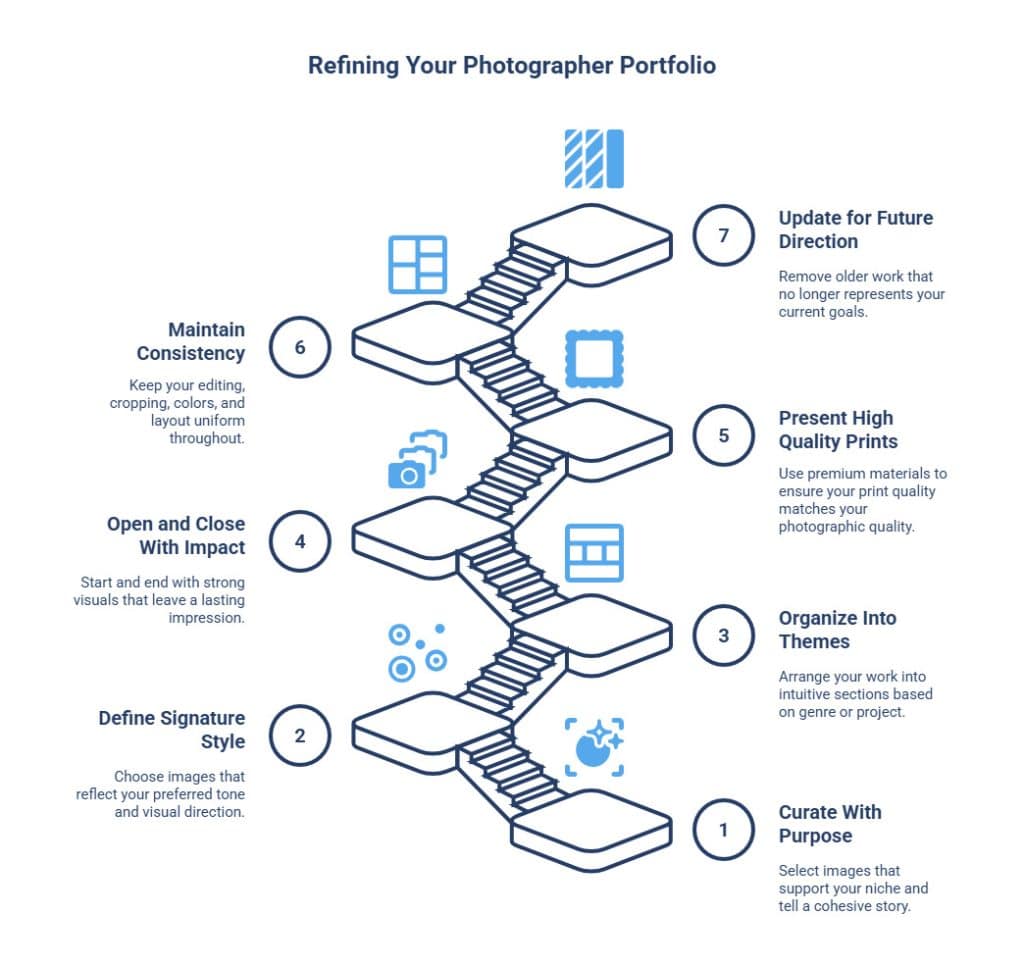
Once your images are selected and your layout is planned, the next step is refining your photographer portfolio so it looks intentional and professional. This is where photographers often move from a good portfolio to a great one.
The following tips help you strengthen your presentation, sharpen your brand identity, and ensure your portfolio leaves a memorable impression.
- Curate With Purpose, Not Emotion: Go beyond choosing images you personally like. Select photographs that support your niche, match your current skill level, and sit well together. Every image should serve a clear purpose and reinforce the story you want your portfolio to tell.
- Make Your Signature Style Impossible to Miss: Clients look for photographers with a recognisable style. Choose images that reflect your preferred tone, mood, and visual direction. Remove anything that feels outdated or inconsistent with the work you want to attract.
- Use Clear Themes or Categories: Organise your work into simple, intuitive sections based on genre or project. Clear categories make your portfolio easier to navigate and help clients quickly find examples relevant to their needs.
- Open and Close With Impact: Start with an image that immediately communicates your style and skill. End with a strong visual that leaves a lasting impression. These two choices influence how viewers remember your portfolio.
- Present High Quality Print Work: If you are using a physical portfolio book, focus on premium materials. Archival paper, accurate colour reproduction, and clean layouts create a more professional impression. Services like Ex Why Zed help ensure your print quality matches your photographic quality.
- Maintain Consistency Across All Elements: Keep your editing, cropping, colours, and layout uniform throughout the portfolio. Consistency builds trust and makes your collection feel polished and cohesive.
- Update Your Portfolio for Your Future Direction: Remove older work that no longer represents your current goals. Keep only the images that align with the clients and assignments you want next.
A well-refined portfolio strengthens your creative identity and builds client trust. When presented with clarity and consistency, it becomes a powerful tool for winning the work you want.
Check out this video to see how to choose between softback and hardback photobooks and find the perfect fit for your work at Ex Why Zed.
How Can Ex Why Zed Help You Print a Professional Portfolio?
A printed photographer's portfolio can have a greater impact during client meetings than a digital gallery. Ex Why Zed helps photographers turn their work into high-quality photobooks. With premium paper and accurate colour reproduction, these photobooks make your portfolio look polished, professional, and memorable.
Why photographers choose Ex Why Zed?
- Specialist in custom photobook printing
- Wide choice of paper stocks, binding styles, and cover finishes
- Consistent colour accuracy and premium print quality
- Transparent pricing and fast turnaround
- Ideal for model portfolios, wedding photography samples, and general portfolio books for photographers
- Complete control over layout and materials
- High-resolution printing is suited for detailed imagery
- Professional finish that helps your work stand out in meetings with agents, editors, or clients
With Ex Why Zed, you can design a portfolio that reflects your style and meets industry expectations. The platform allows you to set your specifications and build a book that feels intentional and well-produced.
Ready to bring your portfolio to life? Reach out today to create a professional photobook that truly showcases your work.
Where to Take Your Portfolio From Here
Creating a photographer’s portfolio can feel a bit overwhelming, but it’s really your chance to show people who you are through your images. A strong photographer portfolio reveals your style, skill, and the kind of work clients or galleries can expect from you.
Every photograph should have a purpose and represent your best work. High-quality printing and thoughtful presentation make a photographer portfolio feel polished and memorable, leaving a lasting impression on anyone who sees it.
Frequently Asked Questions
How do I choose the best photographer for my model portfolio in the UK?
Look for a model portfolio photographer whose style fits your goals. Check their online work and reviews. Platforms like Model Mayhem and niche Facebook groups help you compare photographers before contacting them.
What should I wear for a successful model portfolio shoot?
Plan varied outfits to show range and versatility. Include simple basics and styled looks. Discuss choices with your photographer or agency so the photgrapher portfolio matches what clients expect.
What does a photographer's portfolio look like?
A photographer's portfolio is a visual resume that shows curated work in print or digital form. It highlights style, builds impressions, and reflects the niche, whether fashion, weddings, or portraits.
Best option for a casual photographer portfolio?
For casual photographers, a digital photographer portfolio is ideal. Platforms like Instagram or a simple website let you showcase your work, update easily, and share widely at no cost, keeping everything accessible and up to date.
What is the 3/4 rule in photography?
The 3/4 rule isn't an official photography rule. It usually means angling a subject’s body slightly away from the camera, a technique photographers use to flatter shapes or add interest.
What is the 80/20 rule in photography?
The 80/20 rule suggests your modelling portfolio should be 80 percent proven, hire-winning work and 20 percent creative or personal projects that show range.
How long does a typical model portfolio photography session last?
A model portfolio shoot usually lasts a few hours, covering multiple looks and setups. New models may need extra guidance, but the session provides enough variety for a strong, diverse portfolio.
How do I find a reputable model photographer's portfolio in my area?
Find reliable model portfolio photographers via Model Mayhem, Instagram, or Facebook groups. Review their work, style fit, and client feedback to ensure they match your fashion industry goals and needs.
What does range in a photographer portfolio mean?
Range means showing versatility in your work. Include varied looks, emotions, and styles to prove you can adapt to different projects while keeping a clear, consistent personal style that attracts diverse clients.
Can model portfolio photographers provide printed albums of my photos?
Yes, many photographers offer printed photobooks or albums. These include professional layouts, premium paper, and custom finishes, creating a tangible showcase of your portfolio that impresses agencies, clients, or casting directors.
How many looks or outfits should I prepare for a model portfolio shoot?
It’s best to have 3–5 distinct looks that highlight versatility, including casual, formal, and creative styles. Each outfit should reflect your personality and the type of work you want to attract while keeping the session manageable.