


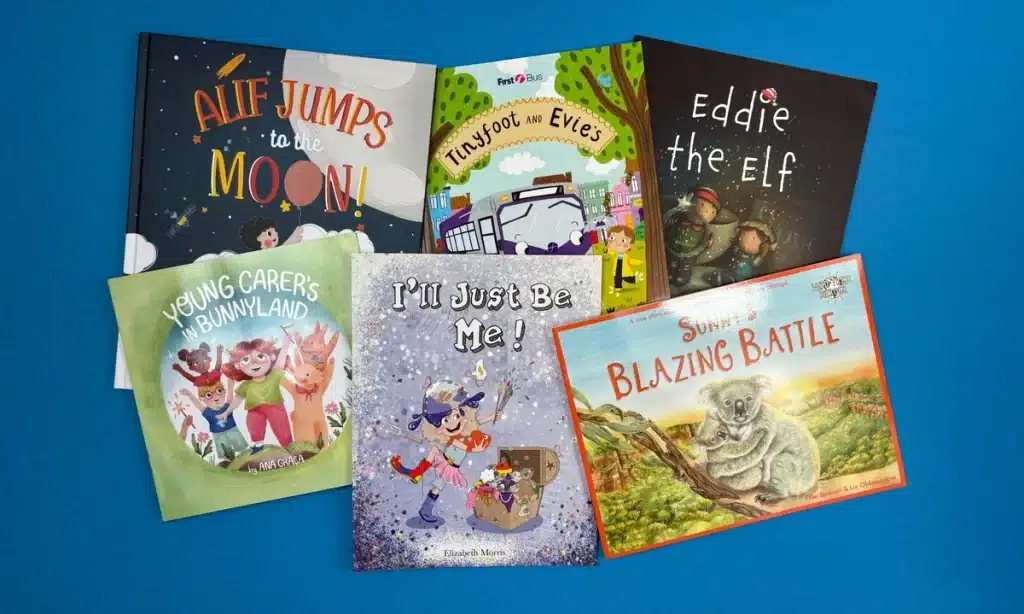
Creating a children’s book is a deliciously layered process. It begins with a story idea, but the finished book depends on far more than words alone. The age of the reader shapes the language. The pacing affects the page turns. The illustrations carry emotional weight. The format, paper, binding and artwork setup determine whether the final result feels like a professional book or a promising draft still waiting for its wings.
At Ex Why Zed, we help authors, illustrators, educators and self-publishers turn those creative ingredients into beautifully printed children’s books with clarity, confidence and control. The strongest projects are built on a few practical truths:
- A children’s book works best when the target age, word count and storytelling style are defined early.
- Illustrations need to feel consistent, expressive and print-ready, whether they are commissioned, self-created or developed with AI tools.
- ChatGPT can speed up ideation, structure and drafting, but a polished physical book still needs human editing, design judgement and professional print preparation.
- The right size, paper stock, lamination and binding influence both the visual impact and the practical budget.
- A smooth print journey comes from getting the fundamentals right: CMYK colour, 300dpi imagery, bleed, margins, PDF export and expert file checking.
Children’s Book Printing Starts With a Story Built for Its Reader
Before thinking about binding, print quantities or delivery dates, the book needs a strong creative core. Writing for children is a specialist skill because the reader’s age changes almost everything: the sentence length, vocabulary, pace, subject matter, level of humour and the balance between text and illustration.
A story for a three-year-old needs a very different rhythm from a picture book aimed at six-year-olds or an early reader for children gaining confidence with independent reading. The most effective manuscripts usually begin with a clear answer to three questions:
- Who is this book for?
- What do they need to feel, learn or enjoy?
- What kind of reading experience should the book create?
A well-shaped children’s book often has a memorable central character, a simple emotional journey and a plot that progresses cleanly from beginning to middle to end. It should avoid overcomplication. Children do not need thin ideas, but they do need clear ones. A charming concept can lose its magic if the storyline wanders, the age range is fuzzy or the language is too adult in its construction.
That is why the earliest writing stage matters so much. Careful audience targeting, strong character development, natural read-aloud rhythm and thoughtful revision create a much stronger base for the printed book to come. There is a full walkthrough of those foundations in How to Write a Children’s Book in 7 Simple Steps, which breaks the process down from age group and format to characters, structure, editing and common pitfalls.
Illustrations, Page Turns and Visual Storytelling Shape the Book’s Personality
Children’s books are not simply stories with pictures added afterwards. The illustrations are part of the narrative engine. They create atmosphere, reveal details the text does not need to explain and give younger readers visual clues that help them follow the story.
A spread showing a timid fox peering from behind a tree, a tiny rocket wobbling on the launchpad or a child gripping a parent’s hand before their first school day can communicate emotion instantly. Those moments need room to land. This is why layout and illustration should be considered together from an early stage.
Creators benefit from planning:
- Which moments deserve a full spread
- Where a page turn can add surprise or suspense
- How much text should sit on each page
- Whether the illustration style feels bright, calm, comic, painterly or educational
- How characters will remain visually consistent from beginning to end
AI illustration tools have opened new creative routes for writers who want to prototype ideas, test art directions or develop story worlds more quickly. They can help generate characters, scenes and visual styles in minutes rather than weeks, which is especially powerful for self-publishers working on a limited budget. Yet AI does not remove the need for creative direction. In fact, it makes direction even more important. Prompt structure, character consistency, scene continuity and image refinement all become essential if the final book is to look cohesive rather than stitched together from disconnected experiments.
The opportunities and limitations are explored in How to Use AI to Illustrate a Children’s Book in 2026, including when AI works best, how to create stronger prompts, how to keep the artwork consistent and why print quality still needs careful human judgement.
ChatGPT Can Accelerate the Idea, but the Printed Book Still Needs Craft
AI writing tools can be genuinely useful during the children’s book creation process. ChatGPT can help brainstorm themes, build character prompts, generate early plot structures, suggest story variations and turn a loose concept into a more organised first draft. For authors facing a blank page, that can be a welcome ignition spark.
However, speed is not the same as readiness. A children’s book written with AI still needs human attention in all the places that matter most:
- Tone must feel warm, natural and right for the age group
- Pacing needs to suit picture-book page turns or early-reader momentum
- Language should be simple without becoming flat
- Emotion has to feel authentic rather than generic
- Illustrations and layout must be planned around the reading experience
The leap from “I have a story draft” to “I have a professional children’s book ready for print” is considerable. The manuscript has to be edited, the pages structured, the art created or refined, and the full book assembled in a proper design environment with precise print specifications.
That practical route is mapped out in How to Use ChatGPT to Print a Children’s Book Today. It explains how AI can support story generation, how to shape the content into a usable children’s book draft, where layout and Adobe InDesign come into play, and why professional printing decisions still define the final quality.
Format, Paper, Binding and Finish Turn the Idea Into a Physical Book
Once the manuscript and visuals are taking shape, the conversation shifts from creative concept to production design. This is where children’s book printing becomes wonderfully tactile. The size, stock, binding and finish all affect how the book feels in the reader’s hands.
A square picture book can feel balanced and friendly. A landscape format gives illustrations more horizontal sweep. A portrait book may suit a more traditional storytelling rhythm. Each choice alters the reading experience before a single page has been turned.
Binding matters too:
- Wire-stitched booklets are excellent for shorter children’s books, activity titles and lower page counts. They open easily and keep the finished piece light and approachable.
- Perfect-bound softcovers suit more substantial books where a visible spine and bookstore-style presentation are desired.
- Hardback books add longevity, gifting appeal and a premium feel for stories designed to be cherished.
Paper selection influences both colour and durability. Illustrated children’s books often benefit from smooth silk stocks that reproduce artwork vividly, while lamination on the cover can provide added protection and refinement. Real project examples on our children’s book printing pages include square perfect-bound books with 300gsm laminated covers and 170gsm silk text pages, as well as landscape wire-stitched titles designed for bright, image-led storytelling and larger runs.
For creators ready to consider format, binding, delivery, print quantities and tried-and-tested specifications, Custom Children’s Book Printing in Essex offers a practical overview of what works, from shorter stapled stories to polished perfect-bound and hardback editions.
Pricing, Print Runs and Timings Need to Match the Book’s Ambition
Every children’s book has its own production logic. A one-off family storybook, a launch run for a self-published author, a school-based educational title and a commercial children’s picture book all require different conversations around budget, quantity and specification.
The cost of printing is shaped by:
- Finished size
- Page count
- Binding method
- Paper weight and finish
- Cover lamination
- Colour throughout
- Quantity ordered
A smaller digital run keeps the upfront investment manageable and gives creators the freedom to test, refine or produce only what they need. Larger quantities often bring the cost per copy down, which can make sense for books destined for events, shops, classrooms or wider sales campaigns.
Timings matter just as much. Once artwork is print-ready, a clear turnaround helps authors plan launches, pre-orders, school deadlines or gifting dates with confidence. Across our children’s book and self-publishing offer, we emphasise practical support such as instant quotes for small runs, free file review, paper samples, fast production options, tracked UK delivery and additional storage or fulfilment services where required.
For writers thinking beyond the first printed batch and toward a wider publishing route, Self Publishing in London explores how expert printing support, production advice, file checking, delivery and distribution-minded services can help authors move from manuscript to market with far less friction.
Print-Ready Artwork Is Where Good Ideas Become Professional Books
A children’s book may have a strong concept and wonderful illustrations, but the final result still depends on proper file preparation. This is the backstage machinery of quality. It does not shout for attention, yet it determines whether the book prints cleanly, trims accurately and holds together visually from cover to final page.
The key print setup essentials include:
- CMYK colour mode
- 300dpi images
- 3mm bleed
- Safe margins
- Correct page dimensions
- Separate cover and text PDFs where required
- Careful proofreading before print
- A final professional artwork check
These details protect the book. Bleed prevents accidental white edges after trimming. Margins stop important wording or facial details creeping too close to the cut line. Good resolution keeps artwork crisp. Correct colour setup helps retain the intended mood of the illustrations when they leave the screen and enter the world of ink and paper.
This is especially important for AI-generated or heavily edited artwork, where image quality, resizing, continuity and export choices can become tricky. A print partner with children’s book experience can identify these issues before production, not after the cartons arrive. The strongest self-publishing journeys are rarely about doing everything alone. They are about knowing which decisions to own creatively and where expert production guidance makes the outcome better.
A Strong Children’s Book Feels Carefully Made From First Word to Final Finish
The most memorable children’s books have a sense of intention running through them. The idea is thoughtful. The characters are vivid. The words are right for the reader. The illustrations feel connected. The page turns have rhythm. The size, binding and paper choices enhance the experience rather than merely containing it.
For authors, illustrators and creative self-publishers, children’s book printing is not a single final step. It is the point where storytelling, design and production converge. When those elements are handled with care, the finished book feels complete, not just printed. It becomes something a child wants to return to, a parent wants to keep, and a creator can hold with genuine pride.
That is the real joy of the process: taking an idea that once existed only in a notebook, a sketchbook or a prompt window, and giving it weight, colour, texture and a place on the shelf.